Tag Archives: William S. Burroughs

Marijuana / Ed Sanders Newsletters

>> return to ED SANDERS main page >>

Ed Sanders published and edited several countercultural underground newsletters and periodicals, most notably The Marijuana Newsletter in the mid-1960s.


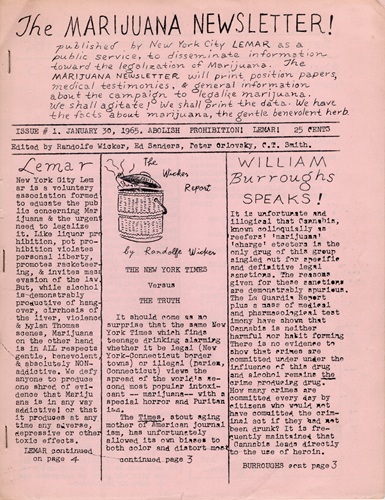
1. THE MARIJUANA NEWSLETTER, No. 1, edited by Randolfe Wicker, Ed Sanders, Peter Orlovsky, C.T. Smith
New York: Lemar, January 1965

First edition, side-stapled, 8.5″ x 11″, 18 pages printed recto only, mimeograph printed. Illustrated by Ed Sanders.

Contributors include: Randolfe Wicker, William S. Burroughs, C.T. Smith, Cassidy.

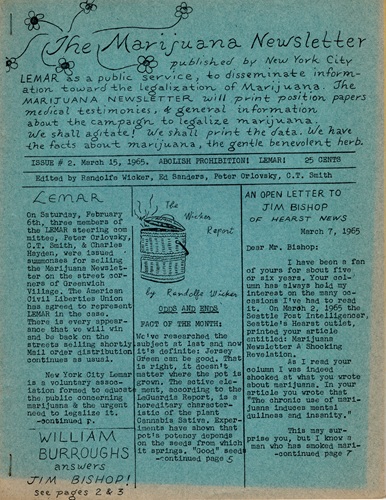
2. THE MARIJUANA NEWSLETTER, No. 2, edited by Randolfe Wicker, Ed Sanders, Peter Orlovsky, C.T. Smith
New York: Lemar, March 1965

First edition, side-stapled, 8.5″ x 11″, 22 pages printed recto only, mimeograph printed. Illustrated by Ed Sanders.

Contributors include: Randolfe Wicker, William S. Burroughs, Cassidy, Ronald W. Padgett, William Beckman.

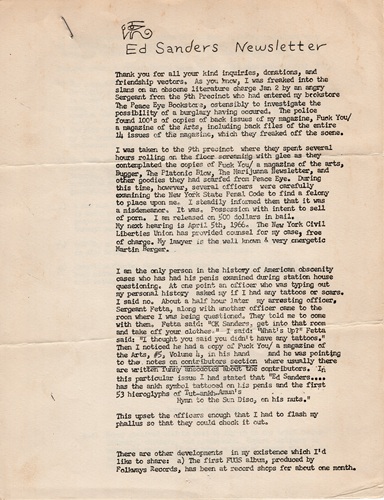
3. ED SANDERS NEWSLETTER, edited by Ed Sanders
New York: Peace Eye Bookstore, n.d. (circa 1966)

First edition, corner-stapled, 8.5″ x 11″, 4 pages printed recto only, mimeograph printed. Illustrated by Ed Sanders.

The newsletter details his arrest on obscenity changes.

Jeff Nuttall

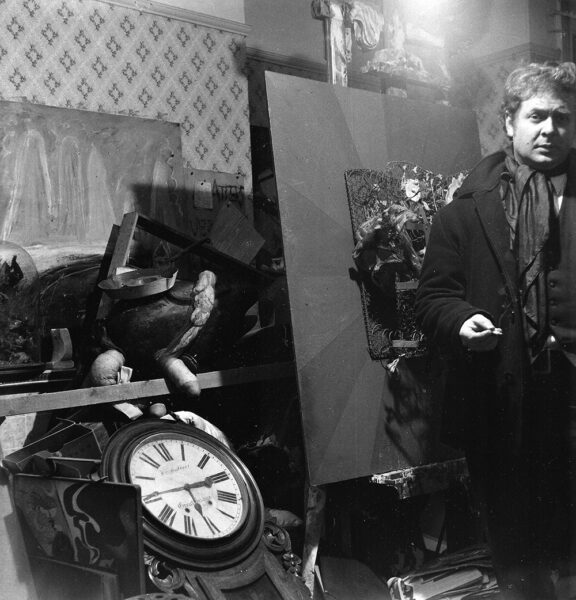
Jeff Nuttall, Todmorden, photograph © David Trace

Jeff Nuttall was a prolific artist and poet but he was also a jazz musician, critic, social commentator, theatrical innovator and influential teacher. In an obituary, the poet Michael Horovitz fittingly described him as ‘a catalyst, perpetrator and champion of rebellion and experiment in the arts and society’. Certainly, Nuttall worked at the margins, creating artworks, performances and writings which challenged moral and political orthodoxies and continually tested the boundaries of social acceptability and public taste. Whilst Nuttall’s creative output – in all its forms – relentlessly confronted authoritarianism, it fundamentally celebrated the nature of what it is to be human with a wonder and rawness which is sometimes comic, sometimes disturbing.


  • Jeff Nuttall checklist
    • Section A: Books
    • Section B: Contributions to Books
    • Section C: Contributions to Periodicals
    • Section D: Publications Edited and Published
        • 1. My Own Mag (Nos. 1-17, 1963-1966)
        • 2. Rock Pot and Son of Rock Pot (Nos. 1-4, 1964-1965)
        • 3. George, Son of My Own Mag (Nos. 1-8, 1969-1971)
        • 4. Prison Clothes Press (Nos. 1-8 [?], 1970-1980)

Born in Clitheroe, Nuttall spent his youth in Herefordshire’s Welsh borders, but returned north to live in Lancashire and Yorkshire for a number of periods throughout his adult life. After leaving art college, his early work demonstrates a preoccupation with the human figure but his involvement in the late 1950s London jazz scene and the early activities of the Campaign for Nuclear Disarmament provided new subjects for exploration through writings and drawings.

Nuttall soon became a pivotal figure in Sixties’ British ‘counter-culture’. He played a key role within the international ‘underground’ press and literary scene, exchanging writings and ideas with fellow thinkers in the United States and Europe – such as William Burroughs, Carl Weissner, Alexander Trocchi, Bob Cobbing and Dom Sylvester Houedard – initiating small journals such as the anarchic cut-up My Own Mag or collaborating on various publishing projects. Much of this is chronicled in Bomb Culture, his semi-autobiographical account published in 1968.

In the Sixties, Nuttall also started working with found objects and soft materials – often using stockings and kapok – to create a series of assemblages which resembled dishevelled or distorted human body parts. Sometimes, these objects would be left in luggage lockers to be discovered later at random. Occasionally, they formed part of a performance, environment or “happening”, an informal, often spontaneous, transient multi-media event which usually involved audience participation. His contribution to the early development of happenings in Britain was particularly important through collaborations and connections with a coterie of artists involved with Group H, the Drury Lane Arts Lab and sTigma.

Happenings merged into the burgeoning field of ‘performance art’ when, in 1966, Nuttall founded the People Show, an eclectic group of artists and performers which took their live acts and improvisational interventions onto the streets, into telephone boxes and public toilets. Since then, attracting a diverse range of artists, musicians and practitioners, the People Show has maintained Nuttall’s legacy with its commitment to the production of experimental multi-disciplinary performances.

In the 1980s, with spells in Australia, Portugal, London, Lancashire and then shifting to the rural borders of Wales, Nuttall returned to painting – producing a series of expressionistic landscapes and reliefs which marry the eroticism of his earlier drawings with a heightened awareness of the fecundity of nature.

From the 1960s through to the mid-1980s, Nuttall was an inspirational teacher, first at Leeds Polytechnic and then as Head of Fine Arts at Liverpool Polytechnic, promoting experimental approaches and crossing creative boundaries. Alongside his teaching, Nuttall steadily acquired a reputation as a significant poet of his generation, publishing collections of his own work and regularly contributing to various literary journals such as Ambit. Throughout his life, Nuttall was a compelling critical commentator on contemporary and popular culture. His writings demonstrate a postmodern sensibility – he saw no paradox in bringing together the ideas of the French essayist and philosopher Georges Bataille and the Blackpool comedian Frank Randle. Above all, Nuttall remained passionate about the emancipatory role of the arts in creating a more humane and open society and he expressed this many times and in many places. By the time of his death in 2004, Nuttall had published an extensive body of work including novels, graphic novelettes, poetry, biographies, critical writings on popular culture and adult comics, many of which are now documented and shown on this website.

—Gillian Whiteley


References consulted:

    • Better Books/Better Bookz: Art, Anarchy, Apostasy, Counter-culture & the New Avant-garde, edited by Rozemin Keshvani, Axel Heil, and Peter Weibel
      London: Koenig Books, 2018
    • Bob Cobbing & Writers Forum, edited by Peter Mayer
      Ceolfrith Arts/Sunderland Arts Centre, October 1974
      Published as Ceolfrith 26. (ref. Mayer)
    • Maynard, Joe and Barry Miles. William S. Burroughs: A Bibliography, 1953-73: Unlocking Inspector Lee’s Word Hoard
      Charlottesville: University of Virginia Press, 1978. (ref. M&M)

Online resources:

Fuck You/ Press – Books

>> return to ED SANDERS main page >>

This index includes books published by Ed Sanders under the Fuck You/ Press imprint from 1962 to 1969.


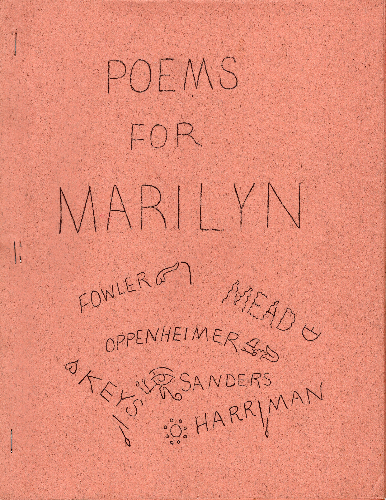
1. POEMS FOR MARILYN, edited by Ed Sanders
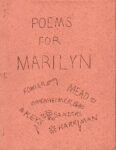
New York: Fuck You Press, September 1962

First edition, side-stapled with printed and illustrated covers, 8.5″ x 11″, 20 pages printed recto only, mimeograph printed. Illustrated by Ed Sanders.

Contents: Joel Oppenheimer (“Dear Miss Monroe”), John Keys (“Poem for Marilyn”), Taylor Mead (“from Taylor Mead’s Diary”), Al Fowler (“Marilyn”), Ed Sanders (“For Marilyn Monroe  August 5, 1962”), John Harriman (“She was a/and Almost Saintly Woman”).

From the colophon: “This volume was hand typed & and by hand mimeographed on speed-o-print Sovereign Stencils catalogue number 851 with a model L Speed-o-print serial #416-3H
POEMS FOR MARILYN sneakily & evilly stomped out on Granitex Flame paper cat. no. 49884-A at a secret location in the lower east side USA
A FUCK YOU/ PRESS PUBLICATION.”

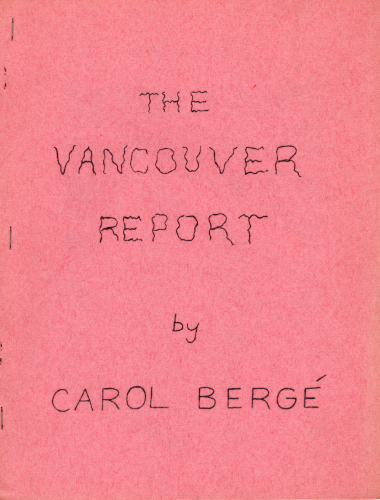
2. Bergé, Carol. THE VANCOUVER REPORT
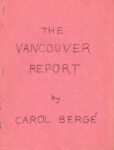
New York: Fuck You Press, February 1964

First edition, side-stapled with printed and illustrated covers, 8.5″ x 11″, 20 pages printed recto only, mimeograph printed. Illustrated by Ed Sanders.

This is Carol Berge’s first book and is her account of the the 1963 Vancouver Poetry Seminar held at the University of British Columbia; other attendees included Robert Creeley, Robert Duncan, Charles Olson, Allen Ginsberg, Denise Levertov, Margaret Avison, Philip Whalen, John Keys, and others.

From the colophon: “THE VANCOUVER REPORT / A FUCK YOU/ press PUBLICATION printed, published & zapped by Ed Sanders at  secret location in the lower east side New York City, U.S.A. February 1964 year of the writhing squack
TOTAL ASSAULT ON THE CULTURE!”

 3. Burroughs, William S. ROOSEVELT AFTER INAUGURATION
New York: Fuck You Press, January 1964

First edition, saddle-stapled with printed and illustrated wrappers, 4.25″ x 5.5″, 24 pages, 500 copies, mimeograph printed by Ed Sanders. Illustrated by Allen Ginsberg. (M&M A9a)

According to Beatbooks catalog #89: The routine, created by Burroughs and Kells Elvins while students at Harvard and originally intended for inclusion in “The Yage Letters”, was censored by the English printers, and subsequently printed in Floating Bear No. 9 (M&M C33), resulting in its editor LeRoi Jones being jailed.

From the colophon: “a FUCK YOU/ press ejaculation printed, published, & zapped at a secret location in the lower east side, new york city
Jan 1964
TOTAL ASSAULT ON THE CULTURE!!”

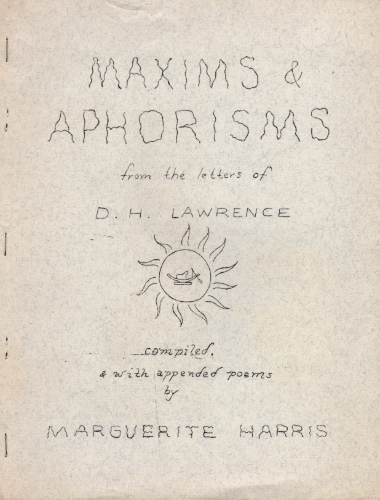
4. MAXIMS AND APHORISMS FROM THE LETTERS OF D.H. LAWRENCE, compiled by Marguerite Harris
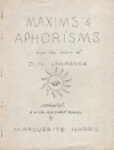
New York: Fuck You Press, September 1964

First edition, side-stapled with printed and illustrated covers, 8.5″ x 11″, 19 pages printed recto only, 250 numbered copies, mimeograph printed. Illustrated by Ed Sanders.

From the colophon: “MAXIMS & APHORISMS printed, designed, & zapped in an edition of 250 copies at the [heiroglyphics] press in a secret location in the lower east side, New York City, U.S.A.
Sept. 1964”

Note: includes two poems, “The Thread of Love” and “The Race”, by Marguerite Harris.

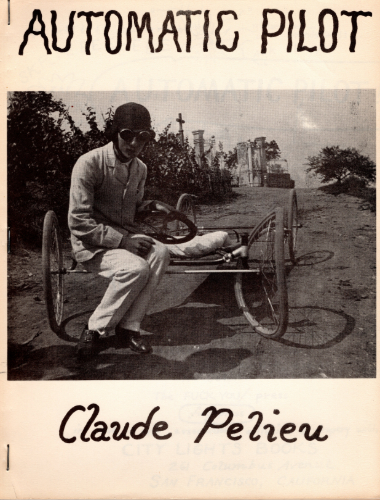
5. Pélieu, Claude. AUTOMATIC PILOT
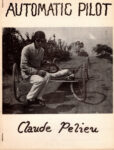
New York: Fuck You Press and City Lights, November 1964

First edition, side-stapled with printed and photo-illustrated covers, 8.5″ x 11″, 41 pages printed recto only. Illustrated by Ed Sanders. Cover photo by Jacques Henri Lartigue.

From the title page: “AUTOMATIC PILOT! printed, freaked, stomped, slurped, spurted, zapped, & ejaculated at a secret love-attack zone grope center in the Lower East Side, New York, U.S.A.
Nov 1964.
The FUCK YOU/ press in close & evil association, collusion & gropery with CITY LIGHTS BOOKS”

Note: this is Pélieu’s first book, translated from French to English by Mary Beach. 

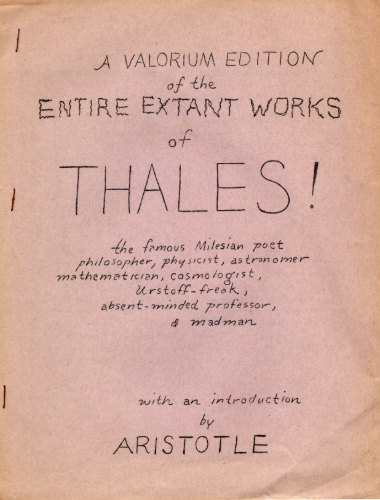
6. A VALORIUM EDITION OF THE ENTIRE EXTANT WORKS OF THALES, edited by Ed Sanders 
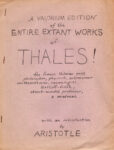
New York: Fuck You Press, June 1964

First edition, side-stapled with printed and illustrated covers, 8.5″ x 11″, 4 pages printed recto only, mimeograph printed. Introduction by Aristotle. Illustrated by Ed Sanders.

From the colophon: “a fuck you/ press publication printed, published & zapped by E. Sanders at secret location in the lower east side
new york city, u.S.a.
TOTAL ASSAULT ON THE CULTURE!”

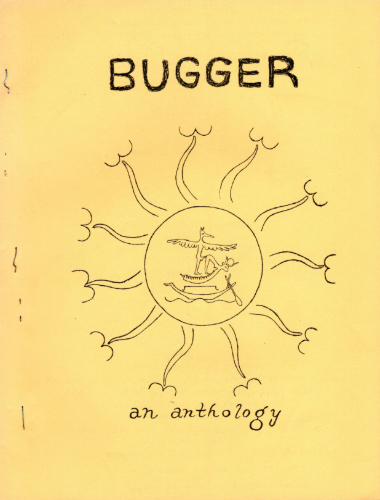
7. BUGGER: AN ANTHOLOGY, edited by Ed Sanders
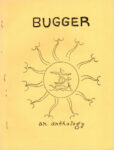
New York: Fuck You Press, November 1964

First edition, side-stapled with printed and illustrated covers, 8.5″ x 11″, 23 pages printed recto only, 400 copies, mimeograph printed. Illustrated by Ed Sanders.

Contents: Szabo ([untitled] “kneeling, she bends over…”), Allen Ginsberg (“This Form of Life Needs Sex” ), Ed Sanders (“Corn Hole Poem”), Ted Berrigan ([untitled] “Dear Ed…”,  “Buggery”), John Harriman (“Bugger 3”), Ron Padgett (“Buggery Poem”), Al Fowler ([untitled] “watching the ladies conjugate thru…”), John Keys (“Bugger”), Harry Fainlight (“O London”). 

From the title page: “BUGGER printed, published, freaked, groped, slurped, sucked, fucked, edited, finger-stalled, supposited, & ejaculated by Ed Sanders at a secret  Bugger scene in the lower east side, New York City, U.S.A.
November 1964
a fuck you/ FLAMING TUCHAS publication
TOTAL BUGGERY IN THE CULTURE!
Labor donated by bugger-freaks”

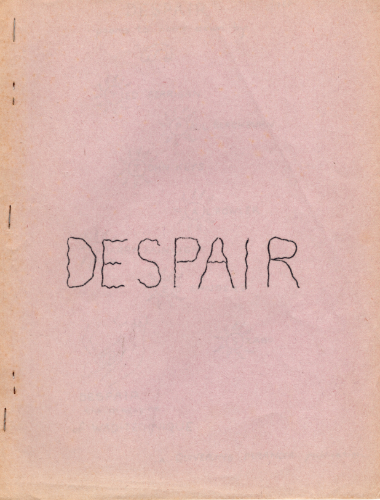
8. DESPAIR: POEMS TO COME DOWN BY, edited by Ed Sanders
New York: Fuck You Press, July 1964

First edition, side-stapled with printed and illustrated covers, 8.5″ x 11″, 36 pages printed recto only, mimeograph printed. Illustrated by Ed Sanders.

Contents: Ted Berrigan ([untitled] “Dear Ed…”, “Three Stages of Despair”), Paul Blackburn (“The Quarrel”, “On the Rocks”), John Keys (“Allen Ginsberg on English Day: A Poem to Cry by while High”), Al Fowler (“Narration for a Home Movie taken by the Poet”), Harry Fainlight (“The Despair Poem”), Ed Sanders (“Despair Poem”), Szabo (“Spring Street Poem for C”).

From the colophon: “DESPAIR an issue with which to disappear into the vanishing asshole of the void
a FUCK YOU/ press publication printed, zapped, puked, & published by Ed Sanders at a secret lovefare bunker in the lower east side new york city U.S.A.
TOTAL ASSAULT ON THE CULTURE”

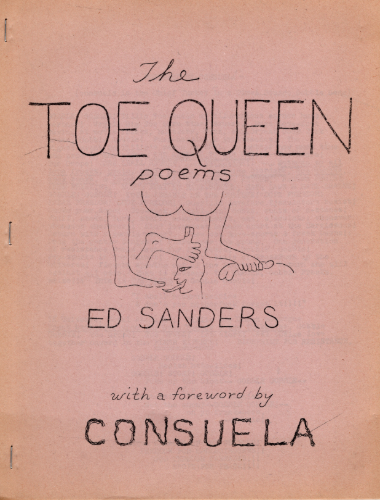
9. Sanders, Ed. THE TOE QUEEN POEMS
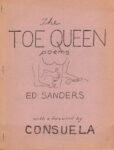
New York: Fuck You Press, 1964

First edition, side-stapled with printed and illustrated covers, 8.5″ x 11″, 36 pages printed recto only, mimeograph printed. Illustrated by Ed Sanders. Foreword by Consuela. 

From the colophon: “The TOE QUEEN poems a FUCK YOU/ PRESS publication printed, published, zapped & ejaculated at a secret location in the lower east side
new york city
U.S.A.
TOTAL ASSAULT ON THE CULTURE!!”

According to BeatBooks, “Poems depicting the life and times of ‘Tillie the Toe Queen’. The favourable response to Sanders’ reading of them at Café Le Metro in the Spring of 1964 provided the impetus for him to form The Fugs a few months later, and one of their first (unrecorded) songs was titled ‘Toe Queen Love’.”

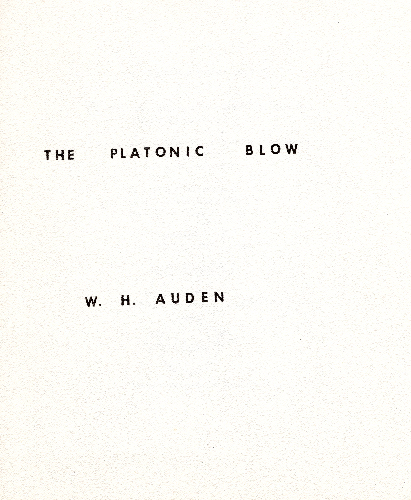
10. Auden, W.H. THE PLATONIC BLOW
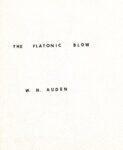
New York: Fuck You Press, November 1965

First edition, saddle-stapled with printed wrappers, 7″ x 8.5″, 12 pages, 300 copies, offset printed. Illustrated by Ed Sanders.

From the colophon: “THE FUCK YOU/ press, a name of distinction, representing 4 years of quality production in the slurping, slarfing, gobbling, golden shower & rim queen industries.”

11. Burroughs, William S. HEALTH BULLETIN: APO-33
New York: Fuck You Press, 1965

First edition, side-stapled with printed and illustrated covers, 8.5″ x 11″, 54 pages, 10-20 copies, mimeograph printed.
(M&M A12a)

According to Sanders “maybe as many as ten or twenty” copies were distributed before he halted publication due to Burroughs’ dissatisfaction with the copy he’d received.

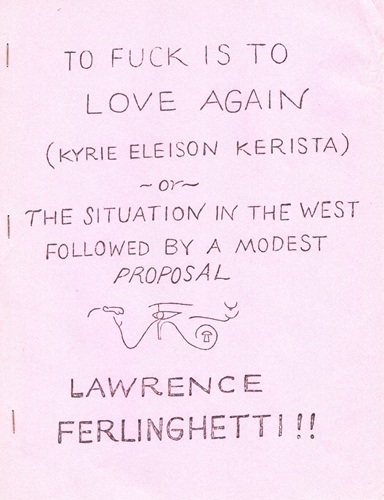
12. Ferlinghetti, Lawrence. TO FUCK IS TO LOVE AGAIN
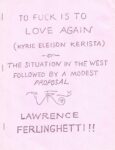
New York: Fuck You Press, 1965

First edition, side-stapled with printed and illustrated covers, 8.5” x 11”, 12 pages, mimeograph printed. Illustrated by Ed Sanders. 

The word ‘Modest’ in the poem’s title is changed to ‘Holy’ on the title page. A statement at its conclusion reads: “Read at Royal Albert Hall, London, June 11, 1965”. The back cover lists “other FUCK YOU/ press books of interest”, including Bugger, Suck, and The Fugs’ Songbook

According to Beat Books, Ferlinghetti opened his reading at the International Poetry Incarnation with the poem, an earlier version of which had appeared in Fuck You/ A Magazine of the Arts, No. 5, Vol. 8 (February 1965). 

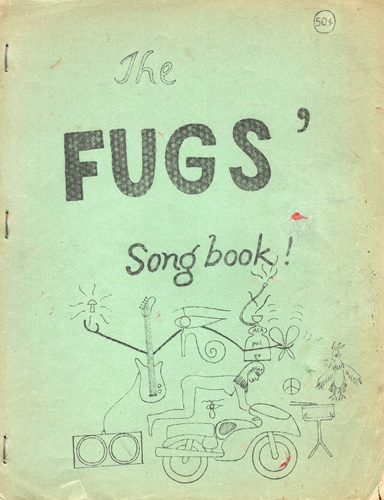
13. Sanders, Ed, Ken Weaver, and Betsy Klein. THE FUGS’ SONGBOOK
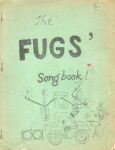
New York: Peace Eye Bookstore, 1965

First edition, side-stapled with printed and illustrated covers, 8.5″ x 11″, 60 pages  printed recto only, mimeograph printed. Illustrated by Ed Sanders.

Later editions were published by: The Sexual Freedom League of San Francisco (second edition Oct., 1965); and, Artist’s Workshop Press in Detroit (third edition of 500 copies printed Sept. 1966.

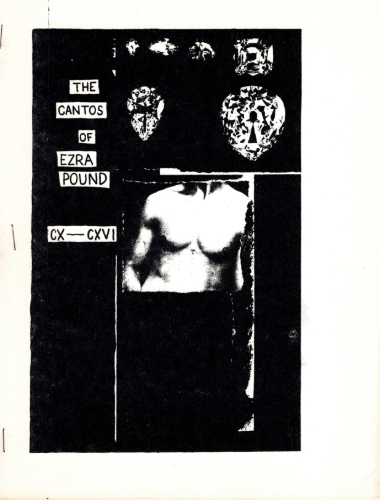
14. Pound, Ezra. THE CANTOS CX-CXVI
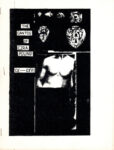
New York: Fuck You Press, 1967

First edition, side-stapled in printed and illustrated card cover, 8.5″ x 11″, 14 pages printed recto only, 300 numbered copies, mimeograph printed. Cover art by Joe Brainard. Illustration by Ed Sanders.

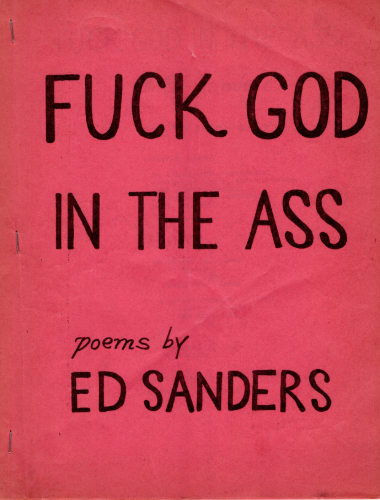
15. Sanders, Ed. FUCK GOD IN THE ASS: POEMS BY ED SANDERS
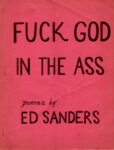
New York: Fuck You Press, 1967

First edition, side-stapled sheets in printed and illustrated covers, 8.5″ x 11″, 19 pages, 500 copies, mimeograph printed. Dedicated to Ted Berrigan and Ken Weaver.

From the colophon: “The FUCK YOU/ press
promoting pornography through
the concept of the
street-frig”

16. Sanders, Ed. A DESCRIPTION OF THE REGAL SOCIETY OF SOOEY SEMEN
New York: Fuck You Press, 1969


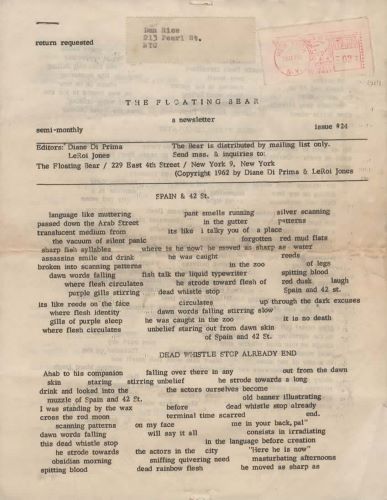
The Floating Bear

THE FLOATING BEAR: A NEWSLETTER, No. 24, edited by Diane di Prima and LeRoi Jones (New York, September-October 1962)

The subtitle “A Newsletter” is the key to The Floating Bear’s chief contribution to literature of the 1960’s; it was a newsletter, a speedy line of communication between experimental poets. Diane di Prima, in the introduction to the reprint edition of Floating Bear, recalls Charles Olson’s tribute to the magazine: “The last time I saw Charles Olson in Gloucester, one of the things he talked about was how valuable the Bear had been to him in its early years because of the fact that he could get new work out that fast. He was very involved in speed, in communication. We got manuscripts from him pretty regularly in the early days of the Bear, and we’d usually get them into the very next issue. That meant that his work, his thoughts, would be in the hands of a few hundred writers within two or three weeks. It was like writing a letter to a bunch of friends.”

>>> further reading >>>

Yugen

YUGEN, No. 3, edited by LeRoi Jones and Hettie Cohen.

Edited by Beat poet LeRoi Jones and Hettie Cohen, Yugen was devoted to “A New Consciousness in the Arts and Letters”. Bringing together the Beats, Black Mountain poets, and the New York School poets of the late 1950s, Yugen took its name from the Japanese aesthetic term meaning “a profound mysterious sense of the beauty of universe … and the sad beauty of human suffering.”

>> further reading >>

Yugen

Edited by Beat poet LeRoi Jones and Hettie Cohen, Yugen was devoted to “A New Consciousness in the Arts and Letters”. Bringing together the Beats, Black Mountain poets, and the New York School poets of the late 1950s, Yugen took its name from the Japanese aesthetic term meaning “a profound mysterious sense of the beauty of universe … and the sad beauty of human suffering.” Cohen, later Hettie Jones, had worked at the Partisan Review and brought with her a background in little-magazine design that gave Yugen an air of respectability and professionalism. The contents represented a new and untraditional approach to poetry. Jones and Cohen also founded Totem Press, which published important early books by Gary Snyder, Philip Whalen, Allen Ginsberg, Michael McClure, Diane di Prima, Jack Kerouac, and many others. Like Yugen, Totem Press books typically feature calligraphic covers that mix American abstract expressionism and Japanese Zen painting.


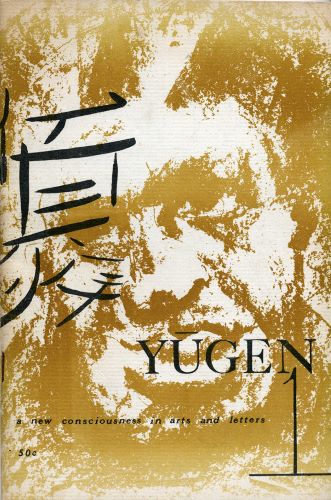
1. YUGEN, No. 1, edited by LeRoi Jones and Hettie Cohen
New York: Yugen, 1958
First edition, saddle-stapled in printed and illustrated wrappers, 5.5″ x 8.5″, 24 pages. Printed in New York by Troubador Press. Cover art by Peter Schwartzburg with calligraphy by Rachel Spitzer. Illustrations by Hector Stewart, Peter Schwartzburg, Tomi Ungerer, and Allen Ginsberg. Titles and composition by Rachel Spitzer and Michael Aleshire

  • Contents:
    1. Philip Whalen – “Further Notice”
      Philip Whalen – “Takeout, 4:II:58”
      Philip Whalen – “Takeout, 15:IV:57”
      Ed James – [untitled] “Mother, be soft and unremembered…”
      Ed James – [untitled] “Hawks will cry…”
      Judson Crews – “Potaphor in a Wretched Wind”
      Judson Crews – “When We Were Young”
      Tom Postell – “Gertrude Stein Rides The Town Down El to New York City”
      Tom Postell – “I Want a Solid Piece of Sunlight and a Yardstick to Measure it with”
      Allen Polite – “Beg Him to Help”
      Allen Polite – “Touching Air”
      Stephen Tropp – “Early Poem for 2 People”
      Bobb Hamilton- “Judgement Day”
      LeRoi Jones – “Slice of Life”
      LeRoi Jones – “Lines to Garcia Lorca”
      Diane Di Prima – “Poem”
      Diane Di Prima – “For Pound, Cocteau & Picasso”
      Ernest Kean – “The Glass is Shattered”
      Jack Micheline – “Steps”
      Allen Ginsberg – [untitled] “We rode on a lonely bus…”
      Allen Ginsberg – “Hitch-Hiking Key West”
      Allen Ginsberg – “In a Red Bar”
      Allen Ginsberg – “On Burroughs’ Work”

2. YUGEN, No. 2, edited by LeRoi Jones and Hettie Cohen
New York: Yugen, 1958
First edition, saddle-stapled in printed and illustrated wrappers, 5.5″ x 8.5″, 24 pages. Printed in New York by Troubador Press. Cover art and titles by Tomi Ungerer. Illustrations by Peter Schwarzburg.

  • Contents:
    1. Gregory Corso – “A Spontaneous Requiem for the American Indian”
      Tuli Kupferberg – “4 Haiku”
      Thomas Postell – “Harmony”
      LeRoi Jones – “Suppose Sorrow was a Time Machine”
      Barbara Ellen Moraff – “Poem for Theo”
      Ron Loewinsohn – “The Colossus of Havana”
      Ron Loewinsohn – “The Trucks”
      Diane Di Prima – “The Lovers”
      Oliver Pitcher – “Tango”
      James Boyer May – “The Back of Mind”
      Harold Briggs – “Being”
      Bobb Hamilton – “A Sentence”
      Gary Snyder – “Chion-in”
      Ben Spellman – “Fool”
      George Stade – “To a Candidate for the Ph.D in Seventeenth Century Literature”

3. YUGEN, No. 3, edited by LeRoi Jones and Hettie Cohen
New York: Yugen, 1958
First edition, saddle-stapled in printed and illustrated wrappers, 5.5″ x 8.5″, 24 pages. Cover art by Peter Schwartzburg. Illustrations by Stanley Fisher.

  • Contents:
    1. Gary Snyder – “Praise for Sick Women”
      Gary Snyder – “Another for the Same”
      William S. Burroughs – “Have You Seen Pantapon Rose?”
      Charles Farber – “Morning Highway”
      Barbara Moraff – “Poem for Tamara”
      Barbara Moraff – “In a Hospital Room from a Halfclosed Lid”
      Barbara Moraff – “Wednesday Understands That”
      C. Jack Stamm – “Now When I Hear”
      Philip Whalen – “Soufflé”
      Gilbert Sorrentino – “The Darkness Surrounds Us”
      Allen Ginsberg – “A New Cottage in Berkeley”
      Mason Jordan Mason – “The Curse of Ham”
      Diane Di Prima – “Lullaby”
      George Stade – “To the White Goddess”
      George Stade – “Advice to the Lovelorn”
      Peter Orlovsky – “First Poem”
      Fivos Delfis – ”A Bird” (trans. Charles Guenther)
      Ray Bremser – “Part III (Poems of the City Madness)”
      Robin Blaser – “Quitting a Job”
      Thomas Jackrell – “Got Them”

4. YUGEN, No. 4, edited by LeRoi Jones and Hettie Cohen
New York: Yugen, 1958
First edition, saddle-stapled in printed and illustrated wrappers, 5.5″ x 8.5″, 28 pages. Cover art by Fielding Dawson.

  • Contents:
    1. Charles Olson – “The Librarian”
      Peter Orlovsky – “Second Poem”
      Frank O’Hara – “To Hell with It”
      Frank O’Hara – “Music”
      Max Finstein – “The Deception”
      Max Finstein – “Savonarola’s Tune”
      Fielding Dawson – “My Old Buddy, for Leonard”
      Allen Ginsberg – “A Crazy Spiritual”
      Ray Bremser – “Penal Madness (Part 1)”
      Edward Marshall – “Jonah at Danbury”
      Edward Marshall – “At Tudor City”
      Joel Oppenheimer – “In the Clutch, for M.F.”
      Joel Oppenheimer – “Fugue”
      Judson Crews – “White Hollyhocks”
      Michael McClure – “The Chamber”
      Ron Loewinsohn – “7.20.58 – for Sue”
      Gary Snyder – “from Myths & Texts”
      Jack Kerouac – “2 Blues and 4 Haikus”
      John Wieners – “Spring 1956”
      Robert Creeley – “New Year’s”
      Robert Creeley – “Saturday Afternoon”
      Gregory Corso – “Away One Year”
      LeRoi Jones – “Parthenos”
      Gilbert Sorrentino – “A Fixture”
      Mason Jordan Mason – “Yes Yes Yes”
      Gregory Corso – “For Black Mountain”

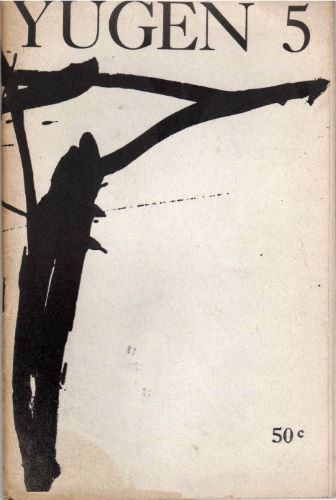
5. YUGEN, No. 5, edited by LeRoi Jones and Hettie Cohen
New York: Yugen, 1959
First edition, saddle-stapled in printed and illustrated wrappers, 5.5″ x 8.5″, 40 pages. Cover art by Basil King. Illustration by Fielding Dawson.

  • Contents:
    1. William Carlos Williams, – “A Formal Design”
      Allen Ginsberg – “from Kaddish”
      Barbara Guest – “Sunday Evening”
      Barbara Guest – “The Crisis”
      David Meltzer – “15th Raga / for Bela Lugosi”
      David Meltzer – “from Night Before Morning / Book One”
      Max Finstein – “A Blue Whale’s Heart”
      Paul Blackburn – “Ramas, Divendres, Diumenga”
      Paul Blackburn – “A Purity Defined”
      Philip Whalen – “I Return to San Francisco”
      Diane Di Prima – “Earthsong”
      John Wieners – “A Poem for Virgins (excerpt)”
      Walter Lowenfels – “The Nightingale, for D.H. Lawrence”
      Michael McClure – “Rant Block”
      Rainer Gerhardt – “Fragment” (trans. Jerome Rothenberg)
      Rainer Gerhardt – “Voices” (trans. Jerome Rothenberg)
      Frank O’Hara – “Ode on Causality”
      César Vallejo – “Black Stone on a White Stone” (trans. Lillian Lowenfels)
      Bruce Fearing – “Scenic Viewpoint”
      Jack Kerouac – “Sitting Under Tree Number Two”
      Barbara Moraff – [untitled] “Like a bowlegged woman…”
      Gregory Corso – “Food”
      Larry Eigner – [untitled] “No-one here…”
      Joel Oppenheimer – “The Issue at Hand”
      Gilbert Sorrentino – letter to the editor

6. YUGEN, No. 6, edited by LeRoi Jones and Hettie Cohen
New York: Yugen, 1960
First edition, saddle-stapled in printed and illustrated wrappers, 5.5″ x 8.5″, 52 pages. Cover art by Basil King.

  • Contents:
    1. Michael McClure – “The Column”
      Charles Olson – “As of Bozeman”
      Charles Olson – “The Distances”
      Charles Olson – “Letter, May 2, 1959”
      Ron Loewinsohn – “Trees / 6”
      Ron Loewinsohn – “Etude, with Chair”
      Philip Lamantia – “Blank Poem for Poe”
      Paul Blackburn – “Song of the Wires”
      Robin Blaser – “Out to Dinner”
      Hubert Selby, Jr. – “Episode from Landsend”
      David Meltzer – “4th Raga / for John Kelly Reed”
      Ray Bremser – “Backyards & Deviations”
      Ed Dorn – “The 6th”
      Ed Dorn – “The 7th”
      Rochelle Owens – “Groshl Monkeys Horses”
      Paul Carroll – “By Its Familiar Accent We Recognize The Ghost”
      Robert Creeley – “The Joke”
      Robert Creeley – “Letter”
      Robert Creeley – “What’s for Dinner”
      Tristan Tzara – “Wheat” (trans. Daisy Aldan)
      Gary Snyder – “A Walk”
      Gary Snyder – “Wild Horses”
      Gary Snyder – “After Work”
      Gary Snyder – “On Vulture Peak”
      Edward Marshall – [untitled] “We as scoffers undercut the sea…”
      LeRoi Jones – “Node”
      LeRoi Jones – “The A, B, C’s”
      Jack Kerouac – “Rimbaud”
      David Wang – “II. Invocation”
      Kenneth Koch – “From a Book of Poetry”
      Larry Eigner – [untitled] “Night. Everything falls flat…”
      Edward Dahlberg – “On Passions and Asceticism”
      Frank O’Hara – “Personal Poem”

7. YUGEN, No. 7, edited by LeRoi Jones and Hettie Cohen
New York: Yugen, 1961
First edition, saddle-stapled in printed and illustrated wrappers, 5.5″ x 8.5″, 65 pages. Cover art by Norman Bluhm.

  • Contents:
    1. LeRoi Jones – “Putdown of the Whore of Babylon”
      Gilbert Sorrentino – “2 Book Reviews”
      Bruce Boyd – “Summer Nightmusic”
      Bruce Boyd – “This is How the Wind Sings…”
      Bruce Boyd – “A Quarrel of Minstrels”
      Bruce Boyd – “Water”
      Bruce Boyd – “Song”
      Bruce Boyd – “Poem”
      Robert Creeley – “The New World”
      Kenneth  Koch – “Guinevere, or The Death of the Kangaroo”
      George Stanley – “Parallels”
      George Stanley – “Winter”
      George Stanley – “Shapes”
      Frank O’Hara – “Personism: A Manifesto”
      Gregory Corso – “On Chessman’s Crime”
      Gregory Corso – “For Black Mountain-2”
      B. Smith  – “Empty Bed Blues”
      Stuart Z Perkoff, – “To Orpheus”
      Stuart Z Perkoff – “Poem”
      Stuart Z Perkoff – “Pithecanthropus Erectus”
      Gilbert Sorrentino – “Some Notes…”
      John Ashbery – “From a Comic Book”
      John Ashbery – “Leaving the Atocha Station”
      Philip Whalen  – “Literary Life in the Golden West”
      Philip Whalen – “Sincerity Shot, 23:III:58”
      Philip Whalen – “A Manuscript in Several Hands 3:III:60”
      Larry Eigner – “K in the USA”
      Larry Eigner – letter to the editor
      Max Finstein – “For Fair Eleanor”
      Joel Oppenheimer – “Morning Song”
      Diane Di Prima – “The Jungle”
      Charles Olson – “Theory of Society”
      Edward Marshall – “Sept. 1957”
      Joel Oppenheimer – letter to the editor
      Allen Ginsberg – “The End”
      LeRoi Jones – “Public Notice”
      Norman Bluhm – untitled drawing
      Frank O’Hara – “Denouement”

8. YUGEN, No. 8, edited by LeRoi Jones and Hettie Cohen-Jones
New York: Totem Press, 1962
First edition, saddle-stapled in printed and illustrated wrappers, 5.5″ x 8.5″, 66 pages. Cover art by Basil King. Illustration by Aaron Roseman.

  • Contents:
    1. George Stanley – “The Message Held up to the Speeding Train on a Willow Hoop”
      George Stanley – “Punishment”
      George Stanley – “The Meteor”
      George Stanley – “The Implicit Acknowledgements”
      George Stanley – [untitled] “The larks…”
      George Stanley – “Valentine”
      George Stanley – “A False Start”
      Gilbert Sorrentino – book reviews of Duncan and Spicer
      Steve Jonas – “No. IV Orgasms”
      Steve Jonas – “Tensone with Relent”
      Steve Jonas – “Discourse”
      Steve Jonas – “To a Strayed Cat”
      Steve Jonas – “A Long Poem for Jack Spicer”
      William Burroughs – “The Cut Up Method of Brion Gysin”
      Speckled Red – “Red’s Dozens”
      George Stanley – book reviews of Finstein and Sorrentino
      Gilbert Sorrentino – “The Meeting”
      Gilbert Sorrentino – “The Memory”
      Edward Dorn – “Notes about Working and Waiting Around”
      Robert Creeley – “Some Notes on Olson’s Maximus”
      Edward Marshall – [untitled] “One writes when…”
      Edward Marshall – “Memory as Memorial in the Last”
      LeRoi Jones – “The Largest Ocean in the World”
      Charles Olson – “Place; & Names”
      Charles Olson – “Book ii, Chapter 37”

Online Resources:

· From a Secret Location – Yugen

· Reality Studio – Yugen


CALL IT BIG TABLE

BIG TABLE, No. 1, edited by Irving Rosenthal and Paul Carrol.

Big Table was launched in Spring 1959 following the suppression of the Winter 1958 issue of The Chicago Review. An exposé in the Chicago Daily News revealed editors Irving Rosenthal’s and Paul Carroll’s plans to publish work by William S. Burroughs, Allen Ginsberg, Lawrence Ferlinghetti, and other Beat writers, and the administration quashed the magazine…”

— from A Secret Location on the Lower East Side

>> further reading >>

Big Table

Big Table was launched in Spring 1959 following the suppression of the Winter 1958 issue of The Chicago Review. An exposé in the Chicago Daily News revealed editors Irving Rosenthal’s and Paul Carroll’s plans to publish work by William S. Burroughs, Allen Ginsberg, Lawrence Ferlinghetti, and other Beat writers, and the administration quashed the magazine.

Rosenthal and Carroll, along with other Chicago Review editors, resigned and with the suppressed material started Big Table. The first issue was edited by Rosenthal and Carroll, though Carroll had to withdraw his name in order to avoid being fired by Loyola University where he was employed. This issue contained work by Jack Kerouac (who named the magazine in a telegram: “CALL IT BIG TABLE”), Edward Dahlberg, and Burroughs (a section from Naked Lunch), and was summarily impounded by the US Post Office.

The lawsuit was unsuccessful and Big Table continued through 1960 and five issues. Rosenthal left the magazine after the first issue and Carroll stayed on as editor for the duration, publishing such writers and artists as Paul Bowles, Antonin Artaud, Leon Golub, John Logan, Robert Duncan, Denise Levertov, Robert Fulton, Harry Callahan, Douglas Woolf, Aaron Siskind, Paul Blackburn, Franz Kline, Diane di Prima, and Gregory Corso.”

— from A Secret Location on the Lower East Side


1. BIG TABLE, No. 1, edited by Irving Rosenthal and Paul Carroll
Chicago: Big Table, Spring 1959
First edition, sewn signatures bound in printed wrappers, 5.5″ x 8″, 158 pages, printed by The Profile Press of New York.

  • Contents:
    1. Irving Rosenthal – “Editorial”
      Jack Kerouac – “Old Angel Midnight”
      Edward Dahlberg – “Further Sorrow of Priapus”
      Edward Dahlberg – “The Garment of Ra”
      William S. Burroughs – “Ten Episodes from Naked Lunch
      Gregory Corso – “Power, for Allen Ginsberg”
      Gregory Corso – “Army”
      Gregory Corso – “Police”

2. BIG TABLE, No. 2, edited by Paul Carroll
Chicago: Big Table, Summer 1959
First edition, sewn signatures bound in printed and illustrated wrappers, 5.5″ x 8″, 124 pages. Cover art by Leon Golub.

  • Contents:
    1. John D. Keefauver – “The Daring Old Maid on the Flying Trapeze”
      Serge Essenin – “The Tramp’s Confession”
      Lawrence Alloway – “Heroes & Monsters & Mothers”
      Leon Golub – “Plate: Horseman”
      Leon Golub – “Plate: Burnt Man”
      Allen Ginsberg – “Kaddish”
      John Logan – “Fire”
      Antonin Artaud – Three Exhortations”
      Alan Ansen – “Anyone Who Can Pick Up a Frying Pan Owns Death”
      Paul Bowles – “Burroughs in Tangier”
      William S. Burroughs – “In Quest of Yage”
      Gael Turnbull – “The Priests of Paris”
      Brother Antoninus – “Zone of Death”
      Andre Breton – “Despair”
      Leon Golub – “Plate: Birth VII”
      Leon Golub – “Plate: Orestes”
      Edward Dahlberg – “Because I Was Flesh”
      Paul Blackburn – “The Signals”
      Margarita Liberaki – “Wedding”
      Leon Golub – “Plate: Abraham Lincoln”
      Leon Golub – “Plate: Columnar Head”
      Lawrence Ferlinghetti – “The Great Chinese Dragon”

3. BIG TABLE, Vol. 1, No. 3, edited by Paul Carroll
Chicago: Big Table, 1959
First edition, sewn signatures bound in printed and photo-illustrated wrappers, 5.5″ x 8″, 120 pages. Cover photograph by Aaron Siskind.

  • Contents:
    1. Allen Ginsberg – “Kaddish”
      John Rechy – “The Fabulous Wedding of Miss Destiny”
      Robert Duncan – “Evocation”
      John Ashbery – “How much longer will I be able to inhabit the Divine Sepulcher”
      John Ashbery – “April Fool’s Day”
      Aaron Siskin – “Terrors & Pleasures of Levitation: four plates”
      Edward Dahlberg – “Because I was Flesh”
      Robert Creeley – “The Way”
      James Wright – “A Whisper to the Ghost who woke Me”
      Paul Carroll – “Father”
      Norman Mailer – “Quick & Expensive Comment on the Talent in the Room”
      Paul Blackburn – “Banyalbufar”
      Edward Dorn – “The Air of June Sings”
      Renee Riese Hubert – “Sizes”
      Peter Orlovsky – “First Poem”
      Lawrence Ferlinghetti – “Her”
      Jean Genet – “The Beggars of Barcelona”

4. BIG TABLE, Vol. 1, No. 4, edited by Paul Carroll
Chicago: Big Table, Spring 1960
First edition, sewn signatures bound in printed and illustrated wrappers, 5.5″ x 8″, 144 pages. Cover art by Robert Fulton.

  • Contents:
    1. William S. Burroughs – “But is all Back Seat of Dreaming”
      Richard G. Stern – “Two Talking”
      John Ashbery – “Europe”
      Douglas Woolf – “Wall to Wall”
      Franz Kline – “Plate: Mister”
      John Logan – “from Monologues of The Son of Saul”
      Robert Creeley – “The Awakening, for Charles Olson”
      Robert Creeley – “The Wife”
      Robert Creeley – “The Memory”
    2. Robert Creeley – “The Snow”
      Harold Norse – “I Am in the Hub of the Fiery Force”
      Harold Norse – “The Fire Sermon”
      James Wright – “Snow Storm in the Mid-West”
      James Wright – “A Young One in a Garden”
      Lawrence Ferlinghetti – “New York – Albany”
      Paul Blackburn – “The Idiot”
      Paul Blackburn – “Homage to the Spirit”
      Frank O’Hara – “Les Luths”
      Frank O’Hara – “Joe’s Jacket”
      Robert Duncan – “Four Pictures of the Real Universe”
      Denise Levertov – “The Rainwalkers”
      Gregory Corso – “Rembrandt – Self Portrait”
      Gregory Corso – “Emily Dickenson”
      Gregory Corso – “Walk”
      Kenneth Koch – “Lunch”
      Allen Ginsberg – “Message”
      William Hunt – Song from the End of the Earth”
      Michael McClure – “Two Poems from a Small Secret Book”
      Bill Berkson – “Poem”
      Paul Carroll – “34′-23′-35′”
      Diane Di Prima – [untitled] “I am a woman and my poems…”
      Philip Lamantia – “Still Poem 8”
      Philip Lamantia – “Cool Apocalypse”
      David Meltzer – “from Notes for a History”
      Gary Snyder – “The Manichaeans”
      Leroi Jones – “For Hettie in her Fifth Month”
      Charles Olson – “Maximus, to Gloucester, Sunday, July 19”
      Robert Creeley – “Olson & Others”
      Allen Ginsberg – “Notes on Young Poets”
      Paul Blackburn – “Writing for the Ear”
      Paul Carroll – “Five Poets in their Skins”

5. BIG TABLE, Vol. 2, No. 5, edited by Paul Carroll
Chicago: Big Table, 1960
First edition, sewn signatures bound in printed and illustrated wrappers, 5.5″ x 8″, 128 pages. Cover art by Harry Callahan.

  • Contents:
    1. Douglas Woolf – “Stand Still”
      Frank O’Hara – “Naptha”
      Edward Dahlberg – “Because I was Flesh”
      Frederick Tristan – “The Bread Tree”
      Frederick Tristan – “The Whole Sea is yet to Come”
      Robert Duncan – “Apprehensions”
      Paul Bowles – “He of the Assembly”
      Kenneth Koch – “Farms’ Thoughts”
      John Rechy – “Between two Lions”
      Bill Berkson – “Poem for Frank O’Hara”
      Pablo Neruda – “Lone Gentleman” (trans. Clayton Eshleman)
      Pablo Neruda – “Death” (trans. Clayton Eshleman)
      John Updike – “Archangel”
      John Ashbery – “Night”
    2. John Ashbery – “A Last Word”
      Harold Rosenberg – “from Arshile Gorky”
      David Meltzer – “Rain Poem”
      David Meltzer – “Heroes: Zap, the Zen Monk”
      Alain Robbe-Grillet – “Scene”
      John Schultz – “Witness”

Online Resources:

From a Secret Location – Big Table

Reality Studio – Big Table

References Consulted:

Maynard, Joe and Barry Miles. William S. Burroughs: A Bibliography, 1953-73
Charlottesville: University Press of Virginia, 1978

Cleft, Edinburgh University

CLEFT, Vol. 1, No. 1, edited by Bill McArthur. Edinburgh, June 1963

Bill McArthur studied drawing and painting at Edinburgh College of Art, then took a degree in Fine Art at Edinburgh University. At Edinburgh he became known as an illustrator and cartoonist in the student press, and editor of the student magazines Gambit and Cleft.

>> further reading >>

Cleft

Bill McArthur studied drawing and painting at Edinburgh College of Art, then took a degree in Fine Art at Edinburgh University. At Edinburgh he became known as an illustrator and cartoonist in the student press, and editor of the student magazines Gambit and Cleft.

Following his involvement in Gambit, McArthur went on to edit Cleft magazine from 1963 to 1964. With an irreverent sweep he downplayed the very function of small magazine in the first issue’s editorial:

” The field of the small literary magazine is, generally speaking, one of sequestered obscurity. It emanates a wilful negation of commercial contact; an opting out of the monetary contract. Drabness of intention and presentation characterize the production. Little attempt is made at communication and they tend to reflect, to a crippling extent, the particular predilections of the current editor. This opting out of the commercial aspect of magazine production has a useful side-kick in that it ensures the brevity of their existence. As a medium of communication they are of doubtful value.”

While McArthur’s prophecy may have been fatefully correct in certain respects, as the magazine itself was only to survive two issues, the publication was certainly anything but drab. The first issue contained contributions from a range of international writers including Norman Mailer, Eugene Ionesco, William Burroughs, Andrei Voznesensky, Anselm Hollo, and Louis Zukofsky. The second issue once again contained work by Burroughs and Mailer, as well as the first two paragraphs from the Noigandres Group’s Pilot Plan for Concrete Poetry.

1. CLEFT, Vol. 1, No. 1, edited by Bill McArthur 
Edinburgh: Cleft, June 1963
First edition, saddle-stapled in printed and photo-illustrated wrappers, 7” x 9.5”, 36 pages.

  • Contents:
    1. Kenneth White – “The Real Climate”
      Norman Mailer – “Four Poems”
      Eugene Ionesco – “The Motor Show”
      William Burroughs – “Martin’s Folly”
      Giles Gordon – “The Milkman”
      Andrei Vosnesensky (trans by Edwin Morgan) – “Three Poems”
      Hugh MacDiarmid – “The Poet We Hope For”
      Astrid Gillis – “Same Rain”
      Anselm Hollo – “The Seventh Lady”
      Iain Inglis – “The Sook”
      Alex Neish – “Leaving for Buenos Aires”
      L. Zukofsky – “Poem 29 (1938), from Anew”

2. CLEFT, Vol. 1, No. 2, edited by Bill McArthur
Edinburgh: Cleft, May 1964
First edition, saddle-stapled in printed and photo-illustrated wrappers, 7” x 9.5”, 32 pages.

  • Contents:
    1. Henry Miller – “O Lake of Light”
      William Burroughs – “A Distant Hand Lifted”
      Norman Mailer – “Greasing the Radar”
      Norman Mailer – “A Study of Cancer”
      Robert Garioch – “At Robert Fergusson’s Grave”
      Mike McClure – “Ghost Tantra 50”
      Anselm Hollo – “Mucho Malo”
      Anselm Hollo – “The Bees”
      Keith Howell – “Washington Square”
      Gary Snyder – “The Old Dutch Woman”
      Edwin Morgan – “Breath of Corruption”
      Edwin Morgan – “Chinese Cat”
      Edwin Morgan – “Siesta of a Hungarian Snake”
      Ian Hamilton Finlay – “The Practice”
      Jonathan Williams – “The Wreck on the A222…”
      Jonathan Williams – “Besides Buttercups”
      Andrei Vosnesensky (trans. by Edwin Morgan) – “Earth”
      Kenneth White – “Ten Thousand Yellow Buds”
      Alex Neish – “The Loneliness of it All”

Online Resources:

Reality Studio – Cleft 

References Consulted:

Clements, Marshall. A Catalog Of Works By Michael Mcclure, 1956-1965
New York: The Phoenix Book Shop, 1965

Maynard, Joe and Barry Miles. William S. Burroughs: A Bibliography, 1953-73
Charlottesville: University Press of Virginia, 1978