Tag Archives: Auerhahn Press

Jack Spicer

youngspicer


Although known primarily among a coterie of poets in the San Francisco Bay Area at the time of his death in 1965, Jack Spicer has slowly become a towering figure in American poetry. He was born in Los Angeles in 1925 to midwestern parents and raised in a Calvinist home. While attending college at the University of California-Berkeley, Spicer met fellow poets Robin Blaser and Robert Duncan. The friendship among these three poets would develop into what they referred to as “The Berkeley Renaissance,” which would in turn become the San Francisco Renaissance after Spicer, Blaser and Duncan moved to San Francisco in the 1950s.


Jack Spicer Checklist:

Section A: Books, Chapbooks, and Pamphlets
Section B: Broadsides, Posters, and Postcards
Section C: Contributions to Books and Other Publications
Section D: Contributions to Periodicals
Section E: Miscellaneous Prose


At Berkeley, Spicer studied linguistics, finishing all but his dissertation for a PhD in Anglo-Saxon and Old Norse. In 1950 he lost his teaching assistantship after refusing to sign a “loyalty oath” to the United States, which the University of California required of all its employees under the Sloan-Levering Act. Spicer taught briefly at the University of Minnesota and worked for a short period of time in the rare books room at the Boston Public Library, but he lived the majority of his life in San Francisco working as a researcher in linguistics.

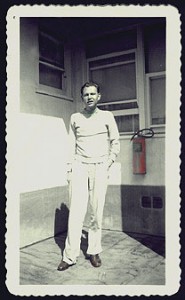
jack-spicer
Jack Spicer at the opening of the 6 Gallery, Halloween 1954. Photo by Robert Berg.

Spicer helped to form the 6 Gallery with five painter friends in 1954. It was at the 6 Gallery during Spicer’s sojourn east that Allen Ginsberg first read Howl. As a native Californian, Spicer tended to view the Beats as usurpers and criticized the poetry and self-promotion of poets like Ginsberg and Lawrence Ferlinghetti, as well as the Beat ethos in general. Always weary of labels and definitions, Spicer tended to associate with small, intimate groups of poets who lived in the North Beach neighborhood of San Francisco. Spicer acted as a mentor and teacher to these young poets by running poetry workshops and providing (sometimes caustic) advice for young poets.

In a 1975 New York Times article, Richard Ellman concluded: “Jack Spicer’s poems are always poised just on the face side of language, dipping all the way over toward that sudden flip, as if an effort were being made through feeling strongly in simple words to sneak up on the event of a man ruminating about something, or celebrating something, without rhetorical formulae, in his own beautiful inept awkwardness. It’s that poised ineptitude and awkwardness of the anti-academic teacher, the scholar of linguistics who can’t say what he knows in formal language, and has chosen to be very naive and look and hear and do. Spicer was not a very happy poet. He was obsessed with possibilities he could only occasionally realize, and too aware of contemporary life to settle for anything less in his work than what he probably could not achieve. He must have been a great spirit.”


Further Reading:

Herndon, James. EVERYTHING AS EXPECTED
San Francisco, Winter 1973

Foster, Edward Halsey. JACK SPICER 
Boise: Boise State University, 1991

Killian, Kevin and Lewis Ellingham. POET BE LIKE GOD: JACK SPICER AND THE BERKELEY RENAISSANCE
Hanover: Wesleyan University Press, 1998

Gizzi, Peter. THE HOUSE THAT JACK BUILT THE COLLECTED LECTURES OF JACK SPICER
Hanover: University Press of New England, 1998

Gizzi, Peter and Kevin Killian. MY VOCABULARY DID THIS TO ME: THE COLLECTED POETRY OF JACK SPICER
Middletown: Wesleyan University Press, 2008


Online Resources:

Academy of American Poets
The Bancroft Library – Jack Spicer Papers 1939-1982
Book Forum
Emory University – Jack Spicer Papers
Jacket Magazine – excerpt from Vancouver Lecture 3
Penn Sound – audio recordings
Poetry Foundation
University of Buffalo 


References Consulted:

Clay, Steven and Rodney Phillips. A SECRET LOCATION ON THE LOWER EAST SIDE: ADVENTURES IN WRITING, 1960-1980
New York: New York Public Library / Granary Books, 1998

Dorbin, Sanford. A CHECKLIST OF THE PUBLISHED WRITING OF JACK SPICER*
Sacramento: California Librarian, October 1970
[* the first (and only?) checklist of Jack Spicer’s writing]

Johnston, Alastair. A BIBLIOGRAPHY OF THE AUERHAHN PRESS & ITS SUCCESSOR DAVE HASELWOOD BOOKS
Berkeley: Poltroon Press, 1976

Johnston, Alastair. A BIBLIOGRAPHY OF THE WHITE RABBIT PRESS
Berkeley: Poltroon Press, 1985

Lepper, Gary M. A BIBLIOGRAPHICAL INTRODUCTION TO SEVENTY-FIVE MODERN AMERICAN AUTHORS
Berkeley: Serendipity Books, 1976

Oyez Press

Oyez Press was founded in 1964 by Robert Hawley and Stevens van Strum in Berkeley, California. Its inaugural run was a series of 10 broadsides featuring poems by Michael McClure, Brother Antoninus, Josephine Miles, Robert Duncan, Robert Creeley, David Meltzer, Denise Levertov, Charles Olson, Gary Snyder and William Bronk. These broadsides were printed by Dave Haselwood’s Auerhahn Press based in San Francisco.

Oyez would continue to publish books for over 20 years by poets primarily from the Black Mountain school and the Bay Area “Renaissance”; publishing over 80 books in addition to numerous keepsakes and broadsides, featuring authors such as David Meltzer, Josephine Miles, Lew Welch, Philip Lamantia, and many others.

The first Oyez book was a collection of poetry by David Meltzer. It was during this period that Hawley began his business relationship with printer Graham Mackintosh. The Oyez poetry editions were well regarded for the simplicity and elegance of their designs. Although not all Oyez books were designed by Mackintosh, several of his designs did receive awards, including an edition of William Everson’s Single Source that was selected as one of the 50 books of the year by the American Institute of Graphic Arts.

A note on this index: the sequence of publication for Oyez items has been difficult to establish. The Oyez bibliography lists items alphabetically rather than chronologically. Items here are listed chronologically but alphabetically within years where no further sequential information is available.


Section A:
Books and Broadsides

A1. McClure, Michael. TWO FOR BRUCE CONNOR
First edition:
Berkeley: Oyez, 1964
Broadside, 12″ x 17″, 500 copies, letterpress printed at the Auerhahn Press. Published as Oyez 1.

A2. Everson, William. THE ROSE OF SOLITUDE
First edition:
Berkeley: Oyez 1964
Broadside, 13″ x 17.5″, letterpress printed at the Auerhahn Press. Published as Oyez 2.

A3. Miles, Josephine. IN IDENTITY
First edition:
San Francisco: Oyez, 1964
Broadside, 11.5″ x 17″, letterpress printed at the Auerhahn Press. Published as Oyez 3.

A4. Duncan, Robert. WINE
First edition:
San Francisco: Oyez, 1964
Broadside, 11.5″ x 17″, letterpress printed at the Auerhahn Press. Published as Oyez 4.

A5. Creeley, Robert. TWO POEMS
First edition:
San Francisco: Oyez, 1964
Broadside, 11.25″ x 16.5″, 423 copies, letterpress printed at the Auerhahn Press. Published as Oyez 5.

A6. Meltzer, David. THE BLACKEST ROSE
First edition:
Berkeley: Oyez, 1964
Broadside, 10.75″ x 17.5″, letterpress printed at the Auerhahn Press. Published as Oyez 6.

A7. Levertov, Denise. CITY PSALM
First edition:
Berkeley: Oyez, 1964
Broadside, 11.5″ x 17.5″, 300 copies, letterpress printed at the Auerhahn Press. Published as Oyez 7.

A8. Olson, Charles. SIGNATURE TO PETITION
First edition:
San Francisco: Oyez 1964.
Broadside, 11″ x 17.25″, letterpress printed at the Auerhahn Press. Published as Oyez 8.

A9. Snyder, Gary. HOP, SKIP, AND JUMP
First edition:
San Francisco: Oyez, 1964
Broadside, 11″ x 17.5″, 350 copies, letterpress printed at the Auerhahn Press. Published as Oyez 9.

A10. Bronk, William. THE CIPHER
First edition:
Berkeley: Oyez, 1965
Broadside, 10.75″ x 17.5″, letterpress printed at the Auerhahn Press. Published as Oyez 10.

A11. Meltzer, David. THE PROCESS
a. First edition, regular copies:
Berkeley: Oyez, 1965
Perfect-bound printed and illustrated wrappers, 37 pages, 475 copies. Designed by Dave Haselwood and printed by Graham Mackintosh. Cover illustration by Peter Le Blanc.

b. First edition, hardcover, numbered and signed copies:
Berkeley: Oyez, 1965
Hardcover in printed and illustrated dust jacket, 37 pages, 25 numbered and signed copies. Designed by Dave Haselwood and printed by Graham Mackintosh. Cover illustration by Peter Le Blanc.

items are alphabetized by author within years from this point on

A12. Dijkstra, Bram. FACES IN SKIN
First edition:
Berkeley: Oyez, 1965
Saddle-stapled in plain wrappers in printed and illustrated dust jacket, 32 pages, 500 copies.

A13. Duncan, Robert. MEDEA AT KOLCHIS: THE MAIDEN HEAD
a. First edition, regular copies:
Berkeley: Oyez, 1965
Saddle-stapled in illustrated wrappers, 44 pages, 500 copies.

b. First edition, hardcover, numbered and signed copies:
Berkeley: Oyez, 1965
Hardcover, 44 pages, 28 copies, numbered and signed.

A14. Kherdian, David. DAVID MELTZER: A SKETCH AND CHECKLIST
First edition:
Berkeley: Oyez, 1965
Saddle-stapled printed wrappers, 9 pages, 500 copies

A15. Kherdian, David. GARY SNYDER: A BIOGRAPHICAL SKETCH AND DESCRIPTIVE CHECKLIST
First edition:
Berkeley: Oyez, 1965
Saddle-stapled printed wrappers, 30 pages, 500 copies

A16. McClure, Michael. THE BEARD
First edition:
(San Francisco):  (Oyez Press), April 1965
First edition, perfect-bound wrappers, 71 pages, 350 copies planned, 330 produced. (Clements A20)


A17. McClure, Michael. POISONED WHEAT
mcclure_poisoneda. First edition, regular copies:
(San Francisco):  (Oyez Press), April 1965
Saddle-stapled illustrated wrappers. 5.75″ x 7.75″, 16 pages, 576 copies. (Clements A21)

b. First edition, hardcover, numbered and signed copies:
(San Francisco):  (Oyez Press), April 1965

Hardcover in printed dust wrapper, 5.75″ x 7.75″, 16 pages, 24 copies lettered alpha through omega and signed by the author. Bound by Dorothy Hawley.
(Clements A21)

A18. McGaugh, Lawrence. A FIFTH SUNDAY
First edition:
Berkeley: Oyez, 1965
Paperback, 26 pages, 500 copies

A19. Welch, Lew. ON OUT

lew_onoutFirst edition:
Berkeley: Oyez, 1965
Stapled sheets bound into printed wrappers, 6″ x 9.25″, 36 pages, 500 copies. Printed by Graham Mackintosh, photograph of poet by Jim Hatch. Dedication: “This book is for Magda”

A20. Alexander, D. NOT A WORD
First edition:
Berkeley: Oyez, 1966
Stapled wrappers, 58 pages, 500 copies.

A21. Duncan, Robert. THE YEAR AS CATCHES
a. First edition, regular copies:
Berkeley: Oyez, 1966
Paperback, 93 pages, 1800 copies.

b. First edition, hardcover, numbered and  signed copies:
Berkeley: Oyez, 1966
Hardcover, 93 pages, 30 copies, numbered and signed.

A22. Duncan, Robert. OF THE WAR PASSAGES, 22-27
a. First edition, regular copies:
Berkeley: Oyez, 1966
Paperback, 11 pages, 500 copies.

b. First edition, numbered and signed copies:
Berkeley: Oyez, 1966
Paperback, 11 pages, 100 copies, numbered and signed.

c. First edition, hardcover, numbered and signed copies:
Berkeley: Oyez, 1966
Hardcover, 11 pages, 6 copies, numbered and signed.

A23. Everson, William. SINGLE SOURCE: THE EARLY POEMS OF WILLIAM EVERSON (1934-1940)
a. First edition, regular hardcover copies:
Berkeley: Oyez, 1966
Hardcover, 105 pages, 1000 copies

b. First edition, hardcover, numbered and signed copies:
Berkeley: Oyez, 1966
Hardcover, 105 pages, 25 copies, numbered and signed

A24. Fabilli, Mary. THE OLD ONES
a. First edition, regular copies:
Berkeley: Oyez, 1966
Paperback, 28 pages, 500 copies

b. First edition, hardcover copies:
Berkeley: Oyez, 1966
Hardcover, 28 pages, 3 copies

A25. Hogg, Robert. THE CONNEXIONS
First edition:
Berkeley: Oyez, 1966
Paperback, 40 pages, 500 copies

A26. Lamantia, Philip. TOUCH OF THE MARVELOUS
a. First edition, regular copies:
Berkeley: Oyez, 1966
Paperback, 65 pages, 1450 copies

b. First edition, hardcover, numbered and signed copies:
Berkeley: Oyez, 1966
Hardcover, 65 pages, 50 copies, numbered and signed.

A27. Miles, Josephine. CIVIL POEMS
First edition :
Berkeley: Oyez, 1966
First edition, paperback, 16 pages, 500 copies

A28. Miles, Josephine. FIELDS OF LEARNING
First edition:
Berkeley: Oyez, 1966
Paperback, 25 pages, 500 copies

A29. Dusenbery, Gail. THE MARK
a. First edition, regular copies:
Berkeley: Oyez, 1967
Paperback, 68 pages, 1200 copies.

b. First edition, hardcover, numbered and signed copies:
Berkeley: Oyez, 1967
Hardcover, 68 pages, 26 copies, numbered and signed.

A30. Everson, William. IN THE FICTIVE WISH
First edition:
Berkeley: Oyez, 1967
Hardcover, 22 pages, 200 copies, numbered and signed.

A31. Korte, Mary Norbert. HYMN TO THE GENTLE SUN
a. First edition, regular copies:
Berkeley: Oyez, 1967
Paperback, 45 pages, 900 copies

b. First edition, hardcover, numbered and signed copies:
Berkeley: Oyez, 1967
Hardcover, 45 pages, 26 copies, numbered and signed

A32. Meltzer, David. JOURNAL OF THE BIRTH
First edition:
Berkeley: Oyez, 1967
Paperback, 19 pages, 1000 copies

A33. Meltzer, David. THE DARK CONTINENT
a. First edition, regular copies:
Berkeley: Oyez, 1967
Paperback, 94 pages, 1000 copies

b. First edition, hardcover copies:
Berkeley: Oyez, 1967
Hardcover, 94 pages, 26 copies

A34. Antoninus, Brother (William Everson). ROBINSON JEFFERS: FRAGMENTS OF AN OLDER FURY
First edition:
Berkeley: Oyez, 1968
Hardcover, 173 pages, 2600 copies

A35. Charters, Ann. OLSON/MELVILLE: A STUDY IN AFFINITY
a. First edition, regular copies:
Berkeley: Oyez, 1968
Paperback, 90 pages, 1000 copies

b. First edition, hardcover copies:
Berkeley: Oyez, 1968
Hardcover, 90 pages, 500 copies

A36. Fabilli, Mary. AURORA BLIGH & EARLY POEMS
a. First edition, regular copies:
Berkeley: Oyez, 1968
Paperback, 108 pages, 500 copies

b. First edition, hardcover copies:
Berkeley: Oyez, 1968
B. First edition, hardcover, 108 pages, 250 copies

A37. Korte, Mary Norbert. BEGINNING OF LINES
a. First edition, regular copies:
Berkeley: Oyez, 1968
Paperback, 37 pages, 500 copies

b. First edition, hardcover, numbered and signed copies:
Berkeley: Oyez, 1968
Hardcover, 37 pages, 200 copies, numbered and signed

A38. Antoninus, Brother. THE LAST CRUSADE
First edition:
Berkeley: Oyez, 1969
Hardcover, 18 pages, 165 numbered and signed copies

A39. Boar, Gerard (Ebbe Borregaard). SKETCHES FOR 13 SONNETS
First edition:
Berkeley: Oyez, 1969
Paperback, (12 pages), 1600 copies

A40. Charters, Samuel. TO THIS PLACE
a. First edition, regular copies:
Berkeley: Oyez, 1969
Saddle-stapled wrappers, 50 pages, 750 copies

b. First edition, hardcover copies:
Berkeley: Oyez, 1969
Hardcover, 50 pages, 250 copies

A41. McGaugh, Lawrence. VACUUM CANTOS
a. First edition, regular copies:
Berkeley: Oyez, 1969
Paperback, 30 pages, 500 copies

b. First edition, hardcover copies:
Berkeley: Oyez, 1969
Hardcover, 30 pages, 30 copies

A42. Blazek, Douglas. FLUX & REFLUX
First edition:
Berkeley: Oyez, 1970
Paperback, 57 pages, 1000 copies

A43. Chiarrello, Gail (Gail Dusenbery). THE BHANGRA DANCE
First edition:
Berkeley: Oyez, 1970
Paperback, 34 pages, 485 copies.

A44. Edelman, Richard Wayne. THE WEDDING FEAST
First edition:
Berkeley: Oyez, 1970
Paperback, 37 pages, 1000 copies. Introduction by Denise Levertov.

A45. Hottel, Christopher. THE KNIVES OF DAWN
First edition:
Berkeley: Oyez, 1970
Paperback, 37 pages, 1000 copies

A46. Korte, Mary Norbert. THE MIDNIGHT BRIDGE
First edition:
Berkeley: Oyez, 1970
Paperback, 44 pages, 1000 copies

A47. Levertov, Denise. SUMMER POEMS, 1969
a. First edition, regular copies:
Berkeley: Oyez, 1970
Paperback, 10 pages, 300 copies

b. First edition, hardcover copies:
Berkeley: Oyez, 1970
Hardcover, 10 pages, 50 copies

A48. Olson, Charles. THE SPECIAL VIEW OF HISTORY
a. First edition, regular copies:
Berkeley: Oyez, 1970
Paperback, 61 pages, 1000 copies

b. First edition, hardcover copies:
Berkeley: Oyez, 1970
Hardcover, 61 pages, 500 copies

A49. Charters, Samuel. SOME POEMS POETS
a. First edition, regular copies:
Berkeley: Oyez, 1971
Paperback, 118 pages, 1000 copies

b. First edition, hardcover copies:
Berkeley: Oyez, 1971
Hardcover, 118 pages, 500 copies

A50. Di Prima, Dianne. KERHONKSON JOURNAL, 1966
First edition:
Berkeley: Oyez, 1971
Paperback, 39 pages, 1000 copies

A51. Everson, William. EARTH POETRY
First edition:
Berkeley: Oyez, 1971
Paperback, 4 pages

A52. Brugnola, Orlanda. KING OF THORNBUSHES
a. First edition, regular copies:
Berkeley: Oyez, 1972
Paperback, 39 pages, 500 copies

b. First edition, hardcover, numbered and signed copies:
Berkeley: Oyez, 1972
Hardcover, 39 pages, 20 copies, numbered and signed

A53. Charters, Samuel. FROM A SWEDISH NOTEBOOK
a. First edition, regular copies:
Berkeley: Oyez, 1972
Paperback, 60 pages, 500 copies

b. First edition, hardcover copies:
Berkeley: Oyez, 1972
Hardcover, 60 pages, 500 copies

A54. Eigner, Larry. SELECTED POEMS
a. First edition, regular copies:
Berkeley: Oyez, 1972
Paperback, 125 pages, 1000 copies

b. First edition, hardcover copies:
Berkeley: Oyez, 1972
Hardcover in dust jacket, 125 pages, 500 copies

A55. Horsley, James. GOD’S NAKED DAUGHTER
a. First edition, regular copies:
Berkeley: Oyez, 1972
Paperback, 38 pages, 850 copies

b. First edition, hardcover, numbered and signed copies:
Berkeley: Oyez, 1972
Hardcover, 38 pages, 150 copies, numbered and signed.

A56. Hooker, Craig Michael. HONOR AWAKENS AGAIN
First edition:
Berkeley: Oyez, 1973
Paperback, 34 pages, 500 copies

A57. Palmer, Doug.  IN QUIRE
First edition:
Berkeley: Oyez, 1973
Paperback, 56 pages, 650 copies

A58. Cebulski, F.J. CORM
a. First edition, regular copies:
Berkeley: Oyez, 1974
Paperback, 59 pages, 750 copies

b. First edition, hardcover copies:
Berkeley: Oyez, 1974
Hardcover, 59 pages, 250 copies

A59. Hill, Lindsay. AVELAVAL
a. First edition, regular copies:
Berkeley: Oyez, 1974
Paperback, 59 pages, 500 copies

b. First edition, hardcover copies:
Berkeley: Oyez, 1974
Hardcover, 59 pages, 250 copies

A60. Meltzer, David. BLUE RAGS
a. First edition, regular copies:
Berkeley: Oyez, 1974
Paperback, 25 pages, 1000 copies

b. First edition, hardcover copies:
Berkeley: Oyez, 1974
Hardcover, 25 pages, 250 copies

A61. Everson, William. ARCHETYPE WEST: THE PACIFIC COAST AS A LITERARY REGION
a. First edition, regular copies:
Berkeley: Oyez, 1975
Paperback, 181 pages, 1000 copies

b. First edition, hardcover copies:
Berkeley: Oyez, 1975
Hardcover, 181 pages, 500 copies

A62. Fabilli, Mary. THE ANIMAL KINGDOM: POEMS & DRAWINGS
First edition:
Berkeley: Oyez, 1975
Paperback, 69 pages, 500 copies

A63. Meltzer, David. HARPS
a. First edition, regular copies:
Berkeley: Oyez, 1975
Paperback, 28 pages, 500 copies

b. First edition, hardcover copies:
Berkeley: Oyez, 1975
Hardcover, 28 pages, 500 copies

A64. Alvarado de Ricord, Elsie; Lucha Corpi, and Concha Michel. FIREFLIGHT
First edition:
Berkeley: Oyez, 1976
Paperback, 109 pages, 1000 copies. Translated by Catherine Rodriguez-Nieto.

A65. Charters, Samuel. IN LAGOS
First edition:
Berkeley: Oyez, 1976
Paperback, 15 pages, 600 copies.

A66. Everson, William. RIVER-ROOT
a. First edition, regular copies:
Berkeley: Oyez, 1976
Paperback, 45 pages, 1000 copies

b. First edition, hardcover, numbered and signed copies:
Berkeley: Oyez, 1976
Hardcover, 45 pages 250 copies, numbered and signed

A67. Garcia, Luis. BEANS
First edition:
Berkeley: Oyez, 1976
Paperback, 67 pages, 1000 copies

A68. Morrison, Rusane. SUMMER PATCHWORK
First edition:
Berkeley: Oyez, 1976
Paperback, 24 pages, 500 copies

A69. Meltzer, David. TWO-WAY MIRROR
a. First edition, regular copies:
Berkeley: Oyez, 1977
Paperback, 149 pages, 1000 copies

b. First edition, hardcover copies:
Berkeley: Oyez, 1977
Hardcover, 149 pages, 500 copies

A70. Canan, Janine. OF YOUR SEED
First edition:
Berkeley: Oyez, 1977
Paperback, 60 pages, 500 copies.

A71. Clark, Naomi. BURGLARIES AND CELEBRATIONS
a. First edition, regular copies:
Berkeley: Oyez, 1977
Paperback, 80 pages, 750 copies.

b. First edition, hardcover copies:
Berkeley: Oyez, 1977
Hardcover, 80 pages, 250 copies. Foreword by William Everson.

A72. Dean, Robert. DINNER AT MME
a. First edition, regular copies:
Berkeley: Oyez, 1977
Paperback, 40 pages, 1000 copies.

b. First edition, hardcover, numbered and signed copies:
Berkeley: Oyez, 1977
Hardcover, 40 pages, 50 copies, numbered and signed

A73. Gitin, David. LEGWORK
a. First edition, regular copies:
Berkeley: Oyez, 1977
Paperback, 59 pages, 950 copies

b. First edition, hardcover, numbered and signed copies:
Berkeley: Oyez, 1977
Hardcover, 59 pages, 50 copies, numbered and signed

A74. Lummis, Dayton. CLOSETS OF MERCY
First edition:
Berkeley: Oyez, 1977
Paperback, 33 pages, 500 copies

A75. Korn, Richard. THE JUDGMENT OF THE CONDOR
a. First edition, regular copies:
Berkeley: Oyez, 1978
Paperback, 80 pages, 500 copies

b. First edition, hardcover copies:
Berkeley: Oyez, 1978
Hardcover, 80 pages, 250 copies

A76. Korte, Mary Norbert. MAMMALS OF DELIGHT
a. First edition, regular copies:
Berkeley: Oyez, 1978
Paperback, 37 pages, 550 copies

b. First edition, hardcover, numbered and signed copies:
Berkeley: Oyez, 1978
Hardcover, 37 pages, 50 copies, numbered and signed

A77. Charters, Samuel. OF THOSE WHO DIED
First edition:
Berkeley: Oyez, 1980
Paperback, 22 pages, 1000 copies.

A78. Everson, William. EARTH POETRY
a. First edition, regular copies:
Berkeley: Oyez, 1980
Paperback, 251 pages, 1000 copies

b. First edition, hardcover copies:
Berkeley: Oyez, 1980
Hardcover, 251 pages, 500 copies

A79. Hiller, Tobey. CROSSINGS
First edition:
Berkeley: Oyez, 1980
Paperback, 17 pages, 600 copies

A80. Korn, Richard and Brugnola Orlanda. JOB
First edition:
Berkeley: Oyez, 1981
Paperback, 22 pages, 1000 copies

A81. Hiller, Tobey. CERTAIN WEATHERS
First edition:
Berkeley: Oyez, 1987
Paperback, 62 pages, 500 copies

A82. Charters, Samuel. A COUNTRY YEAR
First edition:
Berkeley: Oyez, 1992
Paperback, 140 pages, 1000 copies.

The San Francisco Renaissance

[excerpt from Steve Clay and Rodney Phillips’ A SECRET LOCATION ON THE LOWER EAST SIDE. Granary Books, 1998]

The San Francisco Renaissance, a timeline of events

1951

1953

      • City Lights Bookstore opens in North Beach

1955

1956

      • Allen Ginsberg’s Howl published by City Lights

1957

      • Howl confiscated by customs; Lawrence Ferlinghetti and Shigeyoshi Murao arrested
      • Jack Spicer‘s Poetry as Magic Workshop, San Francisco Public Library
      • Charles Olson reads and lectures in San Francisco
      • First book from White Rabbit Press, Steve Jonas’s Love, the Poem, the Sea & Other Pieces Examined

1958

1959

      • Philip Lamantia‘s Ekstasis published by Auerhahn Press
      • Bob Kaufman’s The Abomunist Manifesto published by City Lights
      • J, edited by Jack Spicer
      • Cid Corman’s Origin Press publishes Gary Snyder’s first book, Riprap

1960

      • Gary Snyder’s Myths and Texts published by Corinth Books
      • Lew Welch‘s Wobbly Rock published by Auerhahn Press
      • William S. Burroughs and Brion Gysin’s The Exterminator published by Auerhahn Press

1962

      • White Rabbit Press revived by Graham Mackintosh with Spicer’s LAMENT FOR THE MAKERS, which was published in a small edition of less than 100 copies and illustrated by Mackintosh

1963

      • Vancouver Poetry Conference

1964

      • Open Space publishes Robin Blaser’s first book, The Moth Poem

1965

1966

      • Lenore Kandel’s The Love Book published by Stolen Paper Editions
      • Philip Lamantia‘s Touch of the Marvelous published by Oyez Press
      • John Martin’s Black Sparrow Press begins in Los Angeles

1967

      • The Pacific Nation, edited by Robin Blaser in Vancouver

1968

      • Janine Pommy-Vega’s Poems to Fernando published by City Lights

1969

      • Gary Snyder’s book of essays Earth House Hold published by New Directions

1975

      • Jack Spicer‘s Collected Books published by Black Sparrow


In San Francisco, the commingling of several activities helped to prepare the ground for the remarkable literary explosion that was soon to take place. The Libertarian Circle held regular literary events; poet members included Kenneth Rexroth, Muriel Rukeyser, William Everson, Robert Duncan, Jack Spicer, and Thomas Parkinson. Rexroth also ran a literary program on KPFA, the country’s first listener-sponsored radio station. Madeline Gleason (assisted by Rexroth and Duncan) founded the San Francisco Poetry Center, housed at San Francisco State College and managed by Ruth Witt-Diamant. The magazines Circle, Ark, City Lights, Goad, Inferno, and Golden Goose helped to consolidate the growing literary underground.

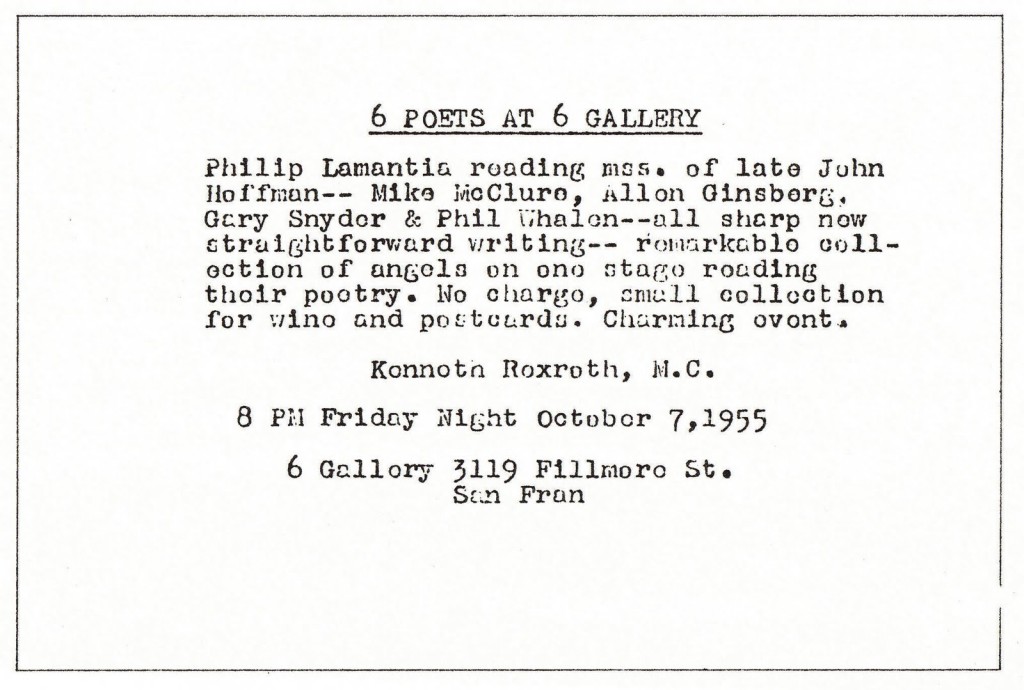
The famous reading at Six Gallery on Fillmore Street was publicized by Allen Ginsberg (via a hundred mailed postcards and a few flyers) thus:

mcclure_sixgallery

On October 7, 1955, in a room measuring 20 x 25 feet with a dirt floor, Ginsberg “read Howl and started an epoch.”(1) Gary Snyder, Philip Lamantia, Michael McClure, and Philip Whalen shared the bill and, by all reports, also read brilliantly. Aside from Rexroth and Whalen, all the readers were in their twenties. Again, in the words of Kenneth Rexroth, “What started in SF and spread from there across the world was public poetry, the return of a tribal, preliterate relationship between poet and audience.”(1)

These events, along with the flourishing of Lawrence Ferlinghetti’s City Lights Bookshop and publishing house, helped to inaugurate and consolidate what has become known as the San Francisco Renaissance. City Lights published Howl in 1956 (Ferlinghetti asked Ginsberg for the manuscript the same night it was read at the Six Gallery) as Number Four in the Pocket Poets Series. (It had been preceded by an extremely rare mimeographed edition, typed by Martha Rexroth and mimeographed by none other than Robert Creeley. Ginsberg’s Siesta in Xbalba had been mimeographed by the man himself on a freighter in the Alaskan Ocean.) Among the audience members that night was one who added his own chant, the young novelist Jack Kerouac, whose On the Road, published in 1957, was to make this reading and its readers legendary. It was also in 1957 that Charles Olson, rector of the experimental Black Mountain College, visited San Francisco and gave a series of lectures on Alfred North Whitehead at the Portrero Hill home of Robert Duncan and his companion, the painter Jess Collins. Among the attendees at the lectures were, of course, Duncan himself, but also Michael McClure, Gary Snyder’s Reed College friend Philip Whalen, Jack Spicer, and Richard Duerden. The same year saw the “San Francisco Scene” issue of Evergreen Review. Poet Helen Adam’s flamboyant 1961 ballad opera, entitled San Francisco’s Burning, epitomized the time, outrageous both aesthetically and socially. Other writers associated with the San Francisco Renaissance included James Broughton, Lew Welch, Ron Loewinsohn, Madeline Gleason, David Meltzer, Kirby Doyle, and Lenore Kandel.

Experimentation with forms of literature and lifestyle had long been an attractive characteristic of life in San Francisco. But the tolerance felt in Northern California was not as evident in Los Angeles. In 1957, an exhibit of work by assemblage artist Wallace Berman at the Ferus Gallery was closed by the Los Angeles Police Department, and Berman was jailed on charges of exhibiting “lewd and lascivious pornographic art.” Found guilty (by the same judge who ruled against Henry Miller), Berman and family left L.A. for San Francisco that year. Berman edited and published a fascinating assemblage magazine called Semina. After the raid of his exhibit at Ferus, he announced in Semina 2 that “I will continue to print Semina from locations other than this city of degen-erate angels.” Berman’s friend, artist George Herms, designed his own books and provided the artwork for others, including Diane di Prima. Herms had likewise found the political climate in L.A. intolerable and had preceded the Bermans to Northern California.

In the mid-1960s, John Martin’s Black Sparrow Press began publishing broadsides and booklets and has, over the years, published a wide variety of experimental and alternative poetry and prose, including work by Duncan, Olson, Spicer, and Creeley among very many others. 

Because of the previous associations of house printer/designer Graham Mackintosh, Black Sparrow is linked to earlier literary small presses of Northern California, particularly White Rabbit Press (at the urging of Jack Spicer, Mackintosh resurrected the press in 1962, printing Spicer’s own Lament for the Makers); Robert Hawley’s Oyez Press (Mackintosh had printed its first book in 1963); and Dave Haselwood’s Auerhahn Press, which flourished during the 1960s and early 70s in San Francisco. Auerhahn published a wide variety of well-designed books, including The Exterminator, an early example of William S. Burroughs and Brion Gysin’s cut-up technique, in 1960. Auerhahn also published John Wieners’s first book, The Hotel Wentley Poems. Oyez published many memorable volumes including Philip Lamantia‘s Touch of the Marvelous. Joe Dunn’s White Rabbit Press, which had begun publishing in 1957 with Steve Jonas’s rough work Love, the Poem, the Sea & Other Pieces Examined, produced books somewhat less elegant than Auerhahn’s or Oyez’s but with a beauty all their own.

The editorial genius behind White Rabbit was the irrepressible Jack Spicer, who published his own remarkable mimeographed magazine, J. Spicer emphasized the inclusion of writers who were not well published elsewhere, and accepted contributions for consideration in a box that was kept in one of three bars in the North Beach area of San Francisco. J is representative of the best of the mimeograph revolution: an uncompromising editorial stance combined with a playful, even colorful, formal character thanks to Fran Herndon, who edited the artwork for the magazine. Spicer’s model for J was Beatitude, which had begun publication in San Francisco slightly before J. And a recalcitrant model it was, since Spicer was not a fan of the Beats and carried on a running war against Ferlinghetti in particular. He imagined Ferlinghetti had become commercial and financially successful, thereby, in Spicer’s mind, “selling out” to the establishment. Magnificently consistent with his principles, Spicer never copyrighted his own work, anticipating the “no copyright, no nuthin” statements of Tom Clark’s London-based Once Series. The performative aspects of Spicer’s poetics as well as his personality also prefigured the rise of poetry readings in the 1950s, particularly those sponsored by the Poetry Center at San Francisco State, which featured mimeographed programs and booklets printing selections from the poets who were reading, among them, Charles Olson, Denise Levertov, and Louis Zukofsky.

Although Spicer’s J didn’t publish the works of “established” poets, Spicer did include the work of Robert Duncan in four issues of his magazine. Duncan and Jess Collins (whose work adorned the cover of many magazines and books of the period, including Open Space, Caterpillar, and The Floating Bear) were important influences on the literary and artistic scene in San Francisco in the 60s. Duncan’s early work was published in Berkeley or North Carolina (his Song of the Border-Guard was published by the Black Mountain College Press with a cover by Cy Twombly in 1952). Other earlier works were multilithed (Fragments of a Disordered Devotionin San Francisco in 1952) or mimeographed (the first hundred copies of Faust Foutu were mimeographed by Duncan himself, and the next 150 or so of one act of the play were multilithed by Joe Dunn of White Rabbit Press at his place of employment, the Greyhound Bus offices in San Francisco). The multilithed third edition of Faust Foutu, although also produced by Dunn, was published under Duncan’s own imprint, Enkidu Surrogate, of Stinson Beach. Duncan’s work was published by an amazing variety and number of publishers, including Oyez, Auerhahn, White Rabbit, Black Sparrow, Divers Press, Jargon, Perishable Press, City Lights, Grove Press, New Directions, and Scribners.

Slightly outside the Spicer circle (although some of his own poems were published in J) was Donald Allen, who, after the publication of The New American Poetry, 1945-1960 and before his removal to New York, established the Four Seasons Foundation in San Francisco, which published the work of a number of the writers from the anthology, including Charles Olson, Ed Dorn, Ron Loewinsohn, Philip Lamantia, Michael McClure, Joanne Kyger, Robin Blaser, and Robert Creeley. Among the early Four Seasons publications were two important works by poet Gary Snyder (the Reed College roommate of Lew Welch and Philip Whalen and the “Japhy Ryder” of Kerouac’s The Dharma Bums): Six Sections from Rivers and Mountains Without End and Riprap and Cold Mountain Poems, both published in 1965. Riprap, it should be noted, was originally published in 1959 as a booklet by Cid Corman’s Origin Press. Snyder’s Myths and Textswas published in 1960 by Corinth Books. Snyder was out of the country on an extended stay in Japan, and the text used for the Corinth publication was probably from a manuscript that LeRoi Jones had hand-copied from one that Robert Creeley had received from Snyder in 1955 or 1956. Snyder’s poetry was extremely popular in the 60s and was often used as text for broadsides by small presses, particularly those whose owners were ecologically minded. For instance, Snyder’s poem “Four Changes” was published in 1969 by Earth Read Out, a Berkeley environmental protection group, as four mimeographed pages, as well as in a folded, printed version in 200,000 copies by environmentalist Alan Shapiro for free distribution to schools and citizens’ groups.

Literary scenes with strong affiliations to the New American Poetry were in evidence elsewhere in California — most notably Bolinas in the 1970s, when that somewhat remote hippie village north of San Francisco became home to many poets. In particular, the transplanted easterner and Poetry Project veteran Bill Berkson and his press Big Sky flourished there in the decade, publishing both a magazine and a series of books. Bolinas residents of the period also included Robert Creeley, Bobbie Louise Hawkins, David Meltzer, Lewis Warsh, Tom Clark, Lewis MacAdams, Philip Whalen, Aram Saroyan, Joanne Kyger, Jim Carroll, and Duncan McNaughton, among others. Ted Berrigan, Alice Notley, and Joe Brainard were among many occasional visitors, with Joe Brainard’s Bolinas Journal providing an interesting record of one such extended stay.


(1) Kenneth Rexroth. AMERICAN POETRY IN THE TWENTIETH CENTURY (New York: Herder and Herder, 1971), p. 141.

Auerhahn Press

While stationed with the U.S. Army in Germany during the 1950s, David Haselwood conceived the idea of becoming a publisher. At the time he was corresponding with his friend Michael McClure (also a native of Wichita, Kansas) who was living in San Francisco. McClure’s first book of poems, Passage (1956), was being published by Jonathan Williams’ Jargon Press. “Jonathan was having books printed in Germany because of the high quality and low cost,” Haselwood says, “and I began looking into things.”
When Haselwood was released from the Army, he came to live in San Francisco. According to Haselwood, “During the summer of 1958 I drifted around San Francisco talking endlessly with painters such as Robert LaVigne and Jesse Sharpe and poets [Philip] Lamantia, [Michael] McClure, [John] Wieners, and reading all the live poetry and prose I could get my hands on. It was at this time that it occurred to me that the press could mean a great many things … ” From this intense exposure to the active literary scene in the Bay Area grew the desire to see these writers published without the great delays imposed by larger printing establishments.


Auerhahn Press Checklist:

Section A: Auerhahn Press: Books & Pamphlets 1958-1965
Section B: Auerhahn Press: Broadsides 1959-1965
Section C: Auerhahn Press: Commissioned Publications 1961-1965
Section D: Dave Haselwood Books 1965-1969


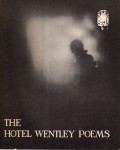
A short while later in 1958 appeared the first publication of the Auerhahn Press, John Wieners’s The Hotel Wentley Poems. After this initial experience, in which the actual printing was done by a commercial printer (and edited by the printer without Haselwood’s knowledge), Haselwood was convinced that he should not only design all future books himself, but also print them: “The first and final consideration in printing poetry is the poetry itself. If the poems are great they create their own space, the publisher is just a midwife during the final operation…” With this ideal in mind, Haselwood tackled the publication of Philip Lamantia’s Ekstasis, and went on to the printing of Michael McClure’s Hymns to St. Geryon.

Though its limited financial resources were drained by this last publication, the press continued its publication of controversial and avant-garde works, such as Lamantia’s pamphlet Narcotica.

Haselwood took on a partner, Andrew Hoyem, in 1961. By then, a number of Kansans had arrived in San Francisco — including Robert Branaman, who shared living quarters with Haselwood for a time, and Glenn Todd, who later worked as a pressman and editor at Arion Press, which Hoyem founded after an amicable dissolution of his Auerhahn interests in 1964. Todd remembers the partners at work at 1334 Franklin Street: “The Auerhahn was a small press in a small room. Andrew would be setting type, and Dave running the press, passing single sheets of paper through. They’d be in their blue printer’s aprons.” Branaman adds, “Dave looked like someone out of Dickens to me. His shop was a center for artists. It was a well-known center of the culture.”

Another of San Francisco’s cultural hot-spots was the Batman Gallery, first owned by William Jahrmarkt, a.k.a. Billy Batman, whose art interests leaned to the visionary, the experimental and the mystical. According to Jack Foley in O Her Blackness Sparkles! The Life and Times of the Batman Art Gallery, 1960-65 (1995), the opening of the gallery was a “spectacular affair” and featured 99 pieces of Bruce Conner’s work. Auerhahn produced the announcement. In 1962, the gallery was sold to Michael Agron, a psychiatrist and University of California Medical Center associate professor who researched LSD as a therapeutic tool. Collaborating with Haselwood, Agron conceived of each exhibition’s announcement as a work of art. The first Agron show, Master-Bat, showcased the works of, among others, Conner and Branaman.

As the Beat scene faded with the ascent of Hippie culture, Haselwood continued to collaborate with artists on Dave Haselwood Books projects. He worked for a time at Arion Press and designed books for other presses, but his interest in publishing had waned by the close of the ’60s. It was time, he says, to choose another path.


References consulted:

Clay, Steven and Rodney Phillips. A SECRET LOCATION ON THE LOWER EAST SIDE: Adventures in Writing, 1960-1980
New York: New York Public Library / Granary Books, 1998

Clements, Marshall. A CATALOG OF WORKS BY MICHAEL MCCLURE, 1956-1965
New York: The Phoenix Book Shop, 1965

Johnston, Alastair. A BIBLIOGRAPHY OF THE AUERHAHN PRESS & ITS SUCCESSOR DAVE HASELWOOD BOOKS
Berkeley: Poltroon Press, 1976

Lepper, Gary M. A BIBLIOGRAPHICAL INTRODUCTION TO SEVENTY-FIVE MODERN AMERICAN AUTHORS
Berkeley: Serendipity Books, 1976

 —

Michael McClure

Photograph of McClure by Wallace Berman taken in 1964; make-up by Robert LaVigne. Beneath the photo is a statement by McClure beginning “Poetry is a muscular principle…”

Since his literary debut at the Six Gallery reading, Michael McClure has been one of the most enduring and influential writers of the Beat movement. As one of five poets who began his career on that night in 1955, he shares a long and rich history with Allen Ginsberg, Philip Whalen, Lawrence Ferlinghetti, Gary Snyder, Philip Lamantia, and many other writers of San Francisco’s Beat period. As one of the youngest members of the Beat circle, McClure played an important role as a bridge between writers and artists of the Beat movement and the region’s youth counterculture of the 1960s and has been a close friend and collaborator with figures such as Jim Morrison, Richard Brautigan, Bob Dylan, and Janis Joplin.


Michael McClure checklist:

Section A: Books and Broadsides
Section B: Contributions to Books and Anthologies
Section C: Contributions to Periodicals


McClure was born October 20, 1932, in Marysville, Kansas. He began his university education in 1951 at the University of Wichita and later transferred to the University of Arizona before moving to San Francisco where he enrolled in a writing workshop with poet Robert Duncan at San Francisco State University. Through his friendship with Duncan and later with poet Kenneth Rexroth, he began to find his place in the city’s literary community in the early 1950s.

In fall 1955 McClure took part in the now famous Six Gallery reading — the foundation of what would soon be called the San Francisco Poetry Renaissance. Here, in his first public reading, McClure, along with Lamantia, Snyder, Whalen, and Ginsberg helped to launch the Beat movement, and his presence at the event helped to instill in the fledgling movement his lifelong fascination with the natural world.

In the months following the Six Gallery reading, McClure began in earnest to publish his work. In 1956 his first small collection of poems PASSAGE, was published by Jonathan Williams (Jargon). Other collections soon followed, including McClure’s first major collection, HYMNS TO ST. GERYON AND OTHER POEMS (Auerhahn Press, 1958), THE NEW BOOK / A BOOK OF TORTURE (Grove Press, 1961), his powerfully erotic long poem DARK BROWN (Auerhahn Press, 1961), the wildly experimental “beast language” poems contained in GHOST TANTRAS (1964), and his vitriolic condemnation of the Vietnam War, POISONED WHEAT (Oyez, 1965). During these early years, McClure also took an active role in seeing that the words and ideas of other writers of the Beat movement and the Black Mountain School made it into print; he co-edited two influential literary journals of the period: ARK II / MOBY I and JOURNAL FOR THE PROTECTION OF ALL BEINGS.

— Encyclopedia of Beat Literature


References consulted:

Clements, Marshall. A CATALOG OF WORKS BY MICHAEL MCCLURE, 1956-1965
New York: The Phoenix Book Shop, 1965

Cook, Ralph T. CITY LIGHTS BOOKS: A DESCRIPTIVE BIBLIOGRAPHY
Metuchen: Scarecrow Press, 1992

Cooney, Seamus. THE BLACK SPARROW PRESS, A CHECKLIST
Los Angeles: Black Sparrow Press, 1971

Johnston, Alastair. A BIBLIOGRAPHY OF THE AUERHAHN PRESS & ITS SUCCESSOR DAVE HASELWOOD BOOKS
Berkeley: Poltroon Press, 1976

Lepper, Gary M. A BIBLIOGRAPHICAL INTRODUCTION TO SEVENTY-FIVE MODERN AMERICAN AUTHORS
Berkeley: Serendipity Books, 1976


Online resources:

Empty Mirror  Books – bibliography

Light and Dust – biography and bibliography

Michael McClure – official site

Penn Sound – audio

Poetry Foundation – biography

Philip Lamantia

lamantia
photo by Harry Redl


Philip Lamantia was born to Sicilian immigrants in San Francisco in 1927. His father was a produce broker in the old Embarcadero. He began writing poetry in elementary school and was later inspired by the paintings of Miro and Dali at the San Francisco Museum of Art. After being expelled for “intellectual delinquency” at age sixteen, he dropped out of high school and moved to New York City, where he lived for several years and where he was associated with Andre Breton and other exiled European artists such as Max Ernst and Yves Tanguy. During these years he worked as an assistant editor of View magazine and his poems were published in View as well as in publications like Hemispheres, which was being published by another French ex-patriot Yvan Goll.

In 1943, when Lamantia was only fifteen years old, Breton heralded him as being “a voice that rises once in a hundred years.” In 1946, at the age of nineteen, his first book of poems Erotic Poems was published by Bern Porter Books in Berkeley, California, followed by two collections (Narcotica and Ekstasis) published in 1959 by Auerhahn Press. A literary prodigy whose poems delved into the worlds of the subconscious and dreams, his love of Surrealism had a major influence on the Beats and other American poets. On March 7, 2005 he died of heart failure in his North Beach, San Francisco apartment at age seventy-seven.

–Thomas Rain Crowe


Section A: Books and Broadsides

1. Lamantia, Philip. EROTIC POEMS
First edition:
(Berkeley): Bern Porter, 1946
Hardcover issued without dust jacket, 42 pages.

2. Lamantia, Philip. EKSTASIS
lamantia_ekstasisFirst edition:
San Francisco: Auerhahn Press, 1959
Perfect-bound in printed wrappers, 5.75″ x 7″, 48 pages, (circa 950 copies). Titling by Robert La Vigne.
(Auerhahn 3)

Note: Printed announcement issued.

3. Lamantia, Philip. NARCOTICA
lamantia_narcoticaFirst edition:
San Francisco: Auerhahn Press, 1959
Saddle-stapled in printed and photo-illustrated wrappers, 6.25″ x 8.5″, 16 pages, (750 copies). Cover photographs by Wallace Berman. Published as Auerhahn Pamphlet No. 1.
(Auerhahn 5)

Note: Printed announcement issued.

4. Lamantia, Philip. DESTROYED WORKS
lamantia_destroyeda. First edition, regular copies:
San Francisco: Auerhahn Press, 1962
Perfect-bound in photo-illustrated wrappers, 7″ x 8.75″, 48 pages, 1250 copies.
(Auerhahn 18)

b. First edition, hardcover, signed copies:
Hardcover in cloth-bound boards, 7″ x 8.75″, 48 pages, 50 numbered and signed copies, bound by the Schuberth Bindery.
(Auerhahn 18)

5. Lamantia, Philip. TOUCH OF THE MARVELOUS
a. First edition, regular copies:
(Berkeley): Oyez, 1966
Perfect-bound in printed and photo-illustrated wrappers, 65 pages, 1450 copies.

b. First edition, hardcover, signed copies:
(Berkeley): Oyez, 1966
Hardcover in cloth-bound boards with gilt-stamped spine, 65 pages, 50 copies on handmade Tovil paper, numbered, signed by the author, bound by Dorothy Hawley.

6. Lamantia, Philip. SELCETED POEMS 1943-1966
First edition:
(San Francisco): City Lights Books, (1967)
Perfect-bound in printed wrappers, 100 pages, published as Pocket Poets Series Number 20.
(Cook 61)

7. Lamantia, Philip. THE BLOOD OF THE AIR
lamantia_blooda. First edition, regular copies:
San Francisco: Four Seasons Foundation, 1970
Perfect-bound in printed and photo-illustrated wrappers, 45 pages, published as Writing 25.

b. First edition, hardcover, signed copies:
San Francisco: Four Seasons Foundation, 1970
Hardcover in paper-bound boards with gilt-stamped cloth spine, 45 pages, 50 copies, numbered, signed by the author, published as Writing 25. (pictured)

8. Lamantia, Philip. TOUCH OF THE MARVELOUS
Second, expanded edition:
Bolinas: Four Seasons Foundation, 1974
Perfect-bound in printed and illustrated wrappers, 47 pages, includes three poems not in the original edition: “Celestial Estrangement”, “Submarine Languor”, and “To You Henry Miller”. Published as Writing 32.

9. Lamantia, Philip. BECOMING VISIBLE
a. First edition, regular copies:
San Francisco: City Lights Books, 1981
Perfect-bound in printed and illustrated wrappers, 96 pages, published as Pocket Poet Series No. 39.
(Cook 146)

b. First edition, hardcover, signed copies:
San Francisco: City Lights Books, 1981
Hardcover in cloth-bound boards in printed and illustrated dust jacket, 96 pages, published as Pocket Poet Series No. 39.
(Cook 146)

10. Lamantia, Philip. MEADOWLARK WEST
First edition:
San Francisco: City Lights Books, 1986
Perfect-bound in printed and illustrated wrappers, 73 pages.
(Cook 171)

11. Lamantia, Philip. BED OF SPHINXES: NEW AND SELECTED POEMS, 1943-1993
First edition:
San Francisco: City Lights Books, 1997
Perfect-bound in printed and illustrated wrappers, 141 pages.

12. Lamantia, Philip. WHAT IS NOT STRANGE?
First edition:
San Francisco: City Lights, 2005
Broadside.


Section B: Contributions to Books and Anthologies, Selected

sequence within years is alphabetical

BEATITUDE ANTHOLOGY. San Francisco: City Lights, 1960

THE BEATS, edited by Seymour Krim. Greenwich: Gold Medal, 1960

THE BEAT SCENE, edited by Elias Wilentz, photographs by Fred McDarrah. New York: Corinth Books, 1960

THE NEW ORLANDO POETRY ANTHOLOGY. New York: New Orlando Publication, 1963

PENGUIN MODERN POETS, 13. London: Penguin, 1969

AERO INTO THE AETHER. Philip Lamantia, Clark Ashton Smith.  Black Swan Press, 1980

FREE SPRITS: ANNALS OF THE INSURGENT IMAGINATION. San Francisco: City Lights, 1980. First edition, wrappers, 223 pages

WHITMAN’S WILD CHILDREN, edited by Neeli Cherkovski. Venice: Lapis Press, 1988

TAU & JOURNEY TO THE END. Philip Lamantia, John Hoffman. San Francisco: City Lights, 2008

CITY LIGHTS POCKET POETS ANTHOLOGY, edited by Lawrence Ferlinghetti. San Francisco: City Lights, 2009


Section C: Contributions to Periodicals, Selected

sequence within years is alphabetical

VIEW, Series III, Number 2. New York, June 1943

VIEW, Series III, Number 3. New York, 1943

VIEW, Series IV, Number 2. New York, Summer 1944

VVV, Number 4. New York, 1944

HEMISPHERES, Number 5. New York, 1945

VIEW, Series V, Number 2. New York, 1945

NEW DIRECTIONS, Number 9. New York, 1946

CONTOUR QUARTERLY, Volume 1, Number 1. Berkeley, 1947

NOW, Number 7. London, February-March 1947

CITY LIGHTS, Number 4. San Francisco, Fall 1953

NEW DIRECTIONS, Number 14. New York, 1953

BEATITUDE, Number 9. San Francisco, September 1959

SEMINA, Number 4. San Francisco, 1959

SEMINA, Number 5. San Francisco, 1959

EVERGREEN REVIEW, Volume 4, Number 11. New York, January-February 1960

THE GALLEY SAIL REVIEW, Number 5. San Francisco, Winter 1960

YUGEN, 6. New York, 1960

DAMASCUS ROAD, Number 1. Allentown, 1961

POEMS FROM THE FLOATING WORLD, Volume 3. New York, 1961

MEASURE, Number 3. Milton, Summer 1962

THE OUTSIDER, Number 2. New Orleans, Summer 1962

TOBAR, Number 4. New York, 1962

EL CORNO EMPLUMADO, Number 9. Mexico City, 1964

FUCK YOU: A MAGAZINE OF THE ARTS, Volume 5, Number 7. New York, September 1964

DAMASCUS ROAD, Number 2. Allentown, 1965

RESIDU, Volume 1, Number 1. Athens, Spring 1965

THE PARIS REVIEW, Number 36. Paris, 1966

THE FLOATING BEAR, Number 33. New York, February 1967

THE FLOATING BEAR, Number 34. New York, 1967

THE FLOATING BEAR, Number 35. New York, April 1968

CATERPILLAR, 10. New York, January 1969

CATERPILLAR, 17. Sherman Oaks, October 1971

INTREPID, Number 20. Buffalo, 1971

ANTAEUS, 6. Tangier, Summer 1972

THE LAMP IN THE SPINE, Number 4. Iowa City, Spring 1972

THE SEVENTIES, Number 1.  Madison, Spring 1972

ARSENAL, Number 2. Chicago, Summer 1973

CULTURAL CORRESPONDENCE, Number 12-14. Providence, Summer 1981

ZYZZYVA, Volume 1, Number 4. San Francisco, Winter 1985

CITY LIGHTS REVIEW, 1. San Francisco, 1987

CALIBAN, 7. Ann Arbor, 1989

CITY LIGHTS REVIEW, 4. San Francisco, 1990


Section D: Ephemera

THE AUERHAHN PRESS CATALOG, 1962
San Francisco: Auerhahn Press, 1962. First edition, wrappers

A KIND OF BEATNESS: PHOTOGRAPHS OF A NORTH BEACH ERA 1950-1965
San Francisco: Focus Gallery, 1975. First edition, wrappers


References Consulted:

Bohn, Dave. OYEZ: THE AUTHORIZED CHECKLIST
Berkeley: n.p., 1997

Cook, Ralph T. CITY LIGHTS: A DESCRIPTIVE BIBLIOGRAPHY
Metuchen: The Scarecrow Press, 1992

Duncan, Michael and Kristine McKenna. SEMINA CULTURE: WALLACE BERMAN & HIS CIRCLE
New York: Distributed Art Publishers, 2005

Harter, Christopher. AN AUTHOR INDEX TO LITTLE MAGAZINES OF THE MIMEOGRAPH REVOLUTION
Lanham: Scarecrow Press, 2008

Johnston, Alastair. A BIBLIOGRAPHY OF THE AUERHAHN PRESS & ITS SUCCESSOR DAVE HASELWOOD BOOKS
Berkeley: Poltroon Press, 1976

Lepper, Gary M. A BIBLIOGRAPHICAL INTRODUCTION TO SEVENTY-FIVE MODERN AMERICAN AUTHORS
Berkeley: Serendipity Books, 1976

Marx, Jake. “Index to Fuck You: A Magazine of the Arts” in THE SERIF: QUARTERLY OF THE KENT STATE UNIVERSITY LIBRARIES, Volume VIII, Number 3
Kent: The Kent State University Libraries, September 1971

Lew Welch

lew_haiku

Lew Welch was born August 16, 1926 in Phoenix, Arizona, and moved with his family to California in 1929. At Reed College in the late 1940s, Welch lived with Gary Snyder and Philip Whalen. In the fall of 1949 Welch was co-editor of the school’s literary magazine and was writing constantly; he wrote his senior thesis on Gertrude Stein and graduated in 1950.

Donald Allen included one of Welch’s poems in The New American Poetry anthology published in 1960. That same year Welch’s first book, Wobbly Rock, was published by Auerhahn Press. For a time he lived in Reno, Nevada, and then in a cabin in the Trinity Alps. He moved back to San Francisco in 1963, and in 1965 published three books.

In 1965, Welch began teaching a poetry workshop offered through the extension program of the University of California at Berkeley. In 1971 Welch returned to the mountains. On May 23, 1971, Gary Snyder went up to Welch’s campsite and found a suicide note in Welch’s truck. Despite an extensive search, Welch’s body was never recovered.


A. Books & Broadsides

1. Welch, Lew. WOBBLY ROCK
lew_wobblySan Francisco: Auerhahn Press, 1960
First edition, saddle-stapled printed wrappers, 6″ x 8″, 12 pages, 500 copies, illustrated by Robert LaVigne. Dedication: for Gary Snyder / “I think I’ll be the Buddha of this place” / and sat himself / down
(Auerhahn 7)

2. Welch, Lew. EARLY SUMMER HERMIT SONG
(San Francisco: San Francisco Arts Commission, 1963)
First edition, broadside, 13” x 20”, 300 copies, signed by author and illustrator, illustrated by W. Weber. Laid into portfolio entitled San Francisco Arts Festival: A Poetry Folio: 1963, which included Robin Blaser, Helen Adam, Phillip Whalen, Lawrence Ferlinghetti, Allan Ginsberg, Robert Duncan, And Lew Welch.

3. Welch, Lew. STEP OUT ONTO THE PLANET
(San Francisco: Four Seasons Foundation, 1964)
First edition, broadside, 9.5” x 12.5”, 300 copies, signed by the author. Printed for the occasion of a reading by Welch, Philip Whalen, and Gary Snyder at the Longshoremen’s Hall in San Francisco on June 12, 1964 known as the Free Way Reading.

4. Welch, Lew. RICHER THAN THE RICHEST FALCONER
(San Francisco): Auerhahn Press, (1965)
First edition, broadside, 9.5″ by 15.5″, 125 copies printed for Don Carpenter.


5. Welch, Lew. ON OUT
lew_onoutBerkeley: Oyez, 1965
First edition, stapled sheets bound into printed wrappers, 6″ x 9.25″, 36 pages, 500 copies. Printed by Graham Mackintosh, photograph of poet by Jim Hatch. Dedication: This book is for Magda.


6. Welch, Lew. HERMIT POEMS
San Francisco: Four Seasons Foundation, 1965
First edition, wrappers, 7″ x 9″, 14 pages, 974 trade copies and 26 copies numbered and signed by the author. Published as Writing 8.


7. Welch, Lew. “AT TIMES WE’RE ALMOST ABLE TO SEE…”
(San Francisco): Don Carpenter, December 1965
First edition, broadside, 7.5″ x 6.25″, 125 copies. Printed by Andrew Hoyem.


8. Welch, Lew. A MOVING TARGET IS HARD TO HIT
San Francisco: Communication Company, 1967
First edition, broadside, 8.5″ x 11″.

A long poem by Welch about dispersing to spread the countercultural message: “Disperse. Gather into smaller tribes. Use the beautiful public land your state and national governments have already set up for you, free. If you want to. Most Indians are nomads. The haight-ashbury is not where it’s at – it’s in your head and hands. Take it anywhere.”

9. Welch, Lew. THE BASIC CON
(Santa Barbara: Unicorn Press, 1967)
First edition, wrappers, 450 copies of the trade edition and 26 copies lettered and signed by the author, two variants printed in brown and black and red and black, printed by Nicolas Muska. Printed on the occasion of Welch’s reading on April 22, 1967 at the Unicorn Book Shop.

10. Welch, Lew. COURSES
lew_coursesSan Francisco: Dave Haselwood, 1968
First edition, hand-sewn suede wrappers, 6.5″ x 4″, 28 pages, 50 copies, letterpress printed. (Haselwood 16)

11. Welch, Lew. COURSES
San Francisco: Cranium Press, 1968
Second “facsimile” edition, hand-sewn printed wrappers, 6.5″ x 4″, 28 pages, letterpress printed.

12. Welch, Lew. SAUSALITO TRASH PRAYER
(San Francisco): n.p., July 1969
First edition, broadside, 3.5” x 6”, letterpress. According to Lepper this was preceded by a photocopied edition of 40 done by Welch at the Public Library in Sausalito and given away.


13. Welch, Lew. THE SONG MT. TAMALPAIS SINGS
lew_thesongSan Francisco: Maya, 1969
First edition, hand-sewn wrappers with printed label, 7.5″ x 10″, 16 pages, 250 trade copies and 50 copies numbered and signed by the author. Published as Maya Quarto Five. Designed and printed by Clifford Burke at Cranium Press.

14. Welch, Lew. FROM WOBBLY ROCK
(San Francisco: Cranium Press, 1969)
First edition, broadside

15. Welch, Lew. THE SONG MT. TAMALPAIS SINGS
lew_the song2Berkeley: Sand Dollar,  December 1970
Second expanded edition, side-stapled printed wrappers, 6″ x 8″, 20 pages, 1000 copies. Published as Sand Dollar 3 and contains three  additional poems not included in the first edition. Published by Jack Shoemaker and designed by Clifford Burke.

14. Welch, Lew. INFLATION FOR NEIL DAVIS, INNKEEPER
(Portland): Yes Press, 1970
First edition, broadside, 5” x 11”

15. Welch, Lew. GETTING BALD
(San Francisco): (Cranium Press), March 1970
First edition, postcard, 4” x 6”.


16. Welch, Lew. SOMETIMES I TALK TO KEROUAC…
Portland: Yes Press, 1971
First edition, broadside, 7″ x 6″.


17. Welch, Lew. SPRINGTIME IN THE ROCKIES, LICHEN
San Francisco: Cranium Press, 1971
First edition, broadside, 8.5” x 14”, variants on pink, grey, and green stock.


18. Welch, Lew. REDWOOD HAIKU & OTHER POEMS
lew_redwoodSan Francisco: Cranium Press, 1972
First edition, hand-sewn printed wrappers, 5.75″ x 5.75″, 20 pages, 250 copies. Printed by Clifford Burke and Nancy Lehman.


19. Welch, Lew. RING OF BONE: SELECTED POEMS 1950-1971
Bolinas: Grey Fox Press, 1973
First edition, wrappers and hardcover issued, 233 pages with index.

20. Welch, Lew. HOW I WORK AS A POET
Bolinas: Grey Fox Press, 1973
First edition, wrappers and hardcover issued, 139 pages.

21. Welch, Lew. A GREETING FOR THE SPRING SOLSTICE
Albany: Sand Dollar, 1976
First edition, Single sheet, folded to make 4 pages. Printed by Wesley Tanner and James Monday at the Arif Press.


22. Welch, Lew. SELECTED POEMS
Bolinas: Grey Fox Press, 1976
First edition, wrappers, 94 pages including index, preface by Gary Snyder.

23. Welch, Lew. I, LEO: AN UNFINISHED NOVEL
Bolinas: Grey Fox Press, 1977
First edition, wrappers, 82 pages.

24. Welch, Lew. INFLATION FOR NEIL DAVIS, INNKEEPER
(Buffalo): White Pine Press, 1979
Second edition, broadside, 4” x 6”.


25. Welch, Lew. I REMAIN – THE LETTERS OF LEW WELCH & THE CORRESPONDENCE OF HIS FRIENDS (Volume 1: 1949-1960)
Bolinas: Grey Fox Press, 1980
First edition, wrappers and hardcover issued, 200 pages.

26. Welch, Lew. I REMAIN – THE LETTERS OF LEW WELCH & THE CORRESPONDENCE OF HIS FRIENDS (Volume 2: 1960-1971)
Bolinas: Grey Fox Press, 1980
First edition, wrappers and hardcover issued, 200 pages.

27. Welch, Lew. HOW I READ GERTRUDE STEIN
Bolinas: Grey Fox Press, 1995
First edition, wrappers, originally written late-1940’s

28. Welch, Lew. LETTERS FROM LEW WELCH
Coventry: The Beat Scene Press, 2010
First edition, wrappers, 125 copies


References consulted:

Bohn, Dave. OYEZ: THE AUTHORIZED CHECKLIST
Berkeley: n.p., 1997

Hawley, Bob. CHECKLISTS OF SEPARATE PUBLICATIONS OF POETS AT THE FIRST BERKELEY POETRY CONFERENCE 1965
Berkeley: Oyez/Cody’s, 1965

Johnston, Alastair. A BIBLIOGRAPHY OF THE AUERHAHN PRESS & ITS SUCCESSOR DAVE HASELWOOD BOOKS
Berkeley: Poltroon Press, 1976

Lepper, Gary M. A BIBLIOGRAPHICAL INTRODUCTION TO SEVENTY-FIVE MODERN AMERICAN AUTHORS
Berkeley: Serendipity Books, 1976